With a master’s in Computer Science, the door is open to some of the most challenging and interesting jobs in the field.
Published Updated on
About the programme
2 years (4 semesters)
English
120
August every year

About the study programme
The MSc in Computer Science gives a broad foundation within the field of computer science. After completing this programme the door is open to some of the most challenging and interesting jobs in the field.
The Computer Science programme offers courses built on top of a Bachelor’s degree in Computer Science.
The programme utilizes lectures and activities such as individual projects, group projects, laboratory exercises with written reports, and company and industrial plant visits as learning methods. There is a high degree of individual advisory in the program, in particular in the work with the master’s thesis at the end.
The programme is organized under the Faculty of Science and Technology, Department of Electrical Engineering and Computer Science.
UiS is offering break rooms, reading rooms and computer rooms especially reserved for the master students. There is also a student organization for these students, ISI, which is arranging both academic and social gatherings.
Career prospects
Developers and researchers in Computer Science are indispensable in almost all industries. Some examples of businesses where they find employment: consulting companies, telecommunications companies, oil-related businesses, hospitals and other public agencies. We encounter digital technology everywhere, and researchers and developers in Computer Science are crucial in making information society and digitalization a reality.
A completed master’s degree in Computer Science provides the basis for admission to the PhD programme in Information technology, mathematics and physics.
Learning outcomes
After having completed the master’s programme in Computer Science, the student shall have acquired the following learning outcomes, in terms of knowledge, skills and general competences:
Knowledge
K1: Have advanced knowledge in Computer Science including Cloud computing, security, blockchain, networks, distributed systems, etc.
K2: Have deep knowledge in the subject areas’ scientific theories and methods.
Skills
S1: Use relevant methods for research and software development in an independent manner.
S2: Analyseand relate in a critical manner to different information sources and apply these to structure and formulate professional reasoning within information technology.
S3: Perform an independent, limited research- or development project under guidance and in line with established ethical norms for research.
S4: Exploit knowledge in wireless communication, sensor networking, and distributed communication systems.
S5: Design, model, simulate, and develop advanced network-based computer systems with focus on dependability and security.
General Competence
G1: Analyse relevant professional, and research ethical problems.
G2: Apply one’s knowledge and skills to new areas to conduct complex tasks and projects.
G3: Communicate comprehensively about own work and master the subject area’s form of expression.
G4: Communicate professional problems, analyse, and draw conclusions within the subject area, both with specialists and the general public.
Academic requirements
A bachelor´s degree within the following disciplines is required:
– Computer Engineering
– Computer Science, Informatics or similar with at least 50 ECTS credits in computer science/computer engineering
All applicants must have at least 30 ECTS credits in mathematics/statistics/calculus.
If you have completed studies/courses outside the University of Stavanger, you must upload course descriptions that have clearly defined curriculum (learning outcomes), together with your transcript of records. The course names and codes on the course descriptions must match the transcript of records. If you do not provide course descriptions, you might risk your application to not be prioritized.
The course descriptions should be submitted in English or in Norwegian, but a translation does not have to be provided by an authorized translator.
Admission to this master’s programme requires a minimum grade average comparable to a Norwegian C (according to ECTS Standards) in your bachelor’s degree. Applicants with a result Second-class lower Division or lower are not qualified for admission.
Application and admission
Contact
For inquiries regarding admission to international Master’s programmes, send an email to: admissions@uis.no
Find more information here: When to apply?
Study plan and courses
Enrolment year: 2023
-
Compulsory courses
-
Ethical Hacking
Year 1, semester 1
-
Security and Vulnerability in Networks
Year 1, semester 1
-
Cloud Computing Technologies
Year 1, semester 1
-
Wireless Communications
Year 1, semester 1
-
Distributed Systems
Year 1, semester 2
-
Data Mining and Deep Learning
Year 1, semester 2
-
Algorithm Theory
Year 1, semester 2
-
Master Thesis in Computer Science
Year 2, semester 3
-
-
3rd semester at UiS or Exchange Studies
-
Courses at UiS 3rd semester
-
Recommended elective courses 3rd semester at UiS
-
Discrete Simulation and Performance Analysis
Year 2, semester 3
-
Information Retrieval and Text Mining
Year 2, semester 3
-
Blockchain Technologies
Year 2, semester 3
-
Image Processing and Computer Vision
Year 2, semester 3
-
-
Other elective courses 3rd semester at UiS
-
Data-intensive Systems and Algorithms
Year 2, semester 3
-
Project in Computer Science
Year 2, semester 3
-
Deep Neural Networks
Year 2, semester 3
-
Statistical Modeling and Simulation
Year 2, semester 3
-
-
-
Exchange 3rd semester
-
Exchange Studies 3rd semester
-
-
Frequently asked questions

What do you learn when you choose Computer Science?
Master’s programme in Computer Science teaches you the management, design and programming of computer systems. The ability to integrate knowledge and skills in security, reliability and scalability together with algorithm theory and statistics is necessary to respond to challenges in computer systems in all industries.
The programme provides a basis for work with the development and planning of commercial computer systems for various purposes. You gain knowledge and skills in network security, reliability of distributed systems, simulation and modeling.
What do you learn when you choose the Data Science programme?
Master’s programme in Data Science teaches you to extract relevant information from a compilation of large data sets from different sources. The ability to create, manage and utilize data has become one of the most important challenges for practitioners in almost all disciplines, sectors and industries.
Data Science provides a basis for work in data analysis and development of data processing systems for the entire data life cycle. You gain knowledge and skills in advanced statistics, data mining, machine learning and processing large amounts of data. The study will be highly sought after in the future labor market, with the development of smart solutions such as in smart cities, with smart energy and digitalisation.
Student exchange
Schedule for the exchange
3rd semester
Students can go on a study abroad experience during the 3rd semester of the master’s programme in Computer Science. This semester consists of 30 ECTS of electives. During the exchange semester you can choose subjects similar to the master programme specialisation. The courses you want to take abroad must be approved by the department. It is important that the subjects/courses from abroad do not overlap with subjects you have already taken. Some advice is to think about your specialisation and your field of interest.
More opportunities
In addition to the recommended universities listed below, UiS has a number of agreements with universities outside Europe that are applicable to all students at UiS, provided that they find a relevant subject offering. Within the Nordic region, all students can use the Nordlys and Nordtek networks.
Contact your student adviser at the Faculty if you have questions about guidance and pre-approval of topics: Sheryl Josdal
General questions about exchange:
Go to the exchange guide in the Digital student service desk
Contact
News from the department

Call for NIKT workshop proposals
There will be a possibility to have workshops on the day after the main NIKT conference, Thursday November 30.

NOKOBIT 2023 – Call for Papers
The NOKOBIT conference has been organized annually for the last 30 years as a national conference in information science…

NIK 2023 – Call for papers
NIK is a broad national conference aimed at being an important national venue for discussions, networking, and dissemina…

NISK 2023 – Call for Papers
NISK 2023 will take place at the University of Stavanger, 27-30 November, co-located with the NIKT conferences.
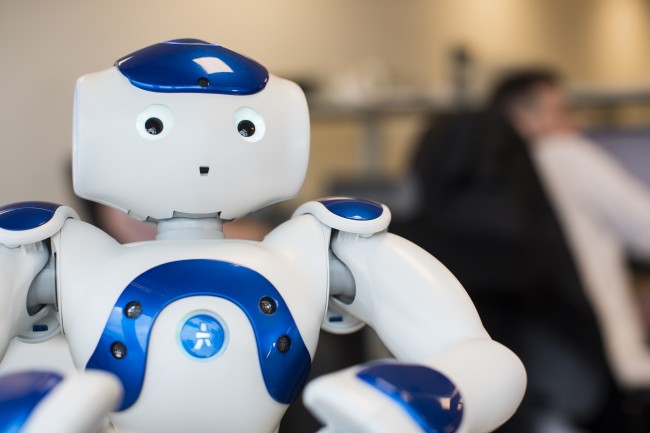
Laboratories for automation technology
The Faculty of Science and Technology at UiS has several laboratories within the field of automation technology. Here is…
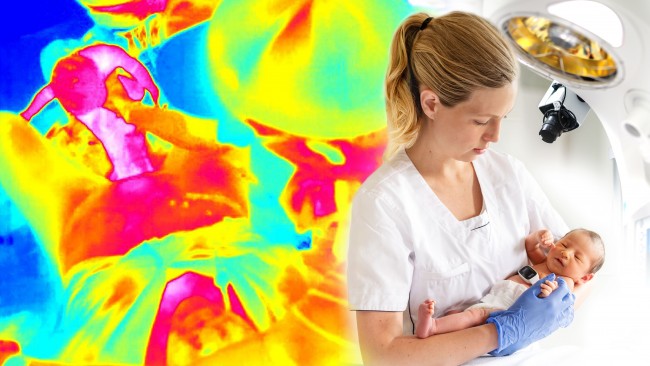
NewbornTime – Improved newborn care based on video and artificial intelligence
The NewbornTime project is about improved newborn care by using artificial intelligence (AI) for activity and event reco…
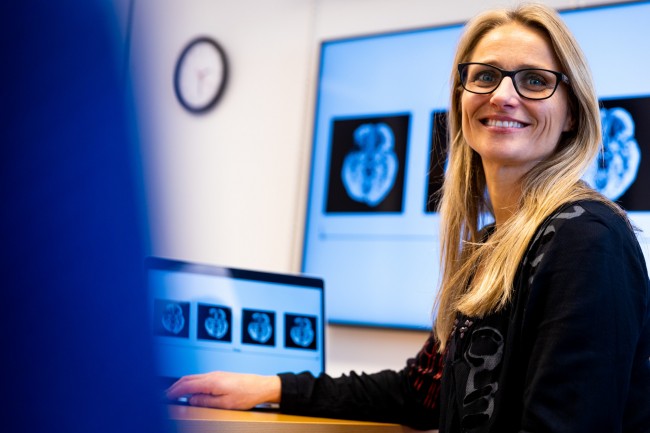
Among Norway’s foremost women in Artifical Intelligence
Professor Kjersti Engan is listed as the 11th most influential woman in the field of artificial intelligence.
UiS establishes an interdisciplinary research group within tunnel safety
Aiming to promote innovation and achieving increased tunnel safety, a research group has been established at the Departm…

How to collaborate with Stavanger AI Lab?
Stavanger AI Lab opens up for several types of collaboration with society. We see it as our social mission to raise comp…

Department of Electrical Engineering and Computer Science
Department of Electrical Engineering and Computer Science is responsible for teaching, research and development within e…

Information Technology, Mathematics and Physics – PhD
The area of Information Technology, Mathematics and Physics is a subfield within the doctoral programme in Science and T…
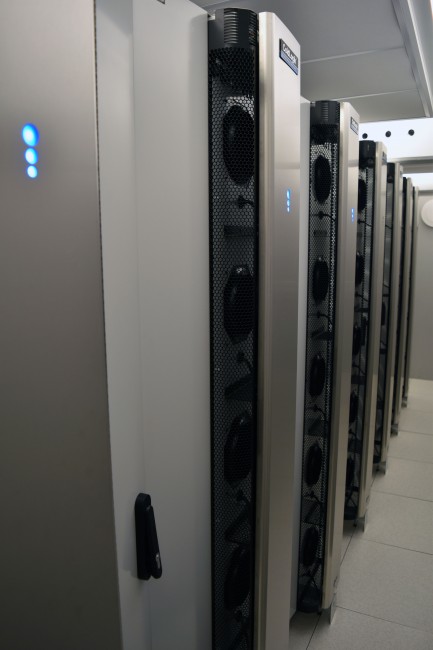
Data-centered and Secure Computing (DSComputing)
Focusing on data, we will obtain value and impact by computing while maintaining privacy and trustworthiness.