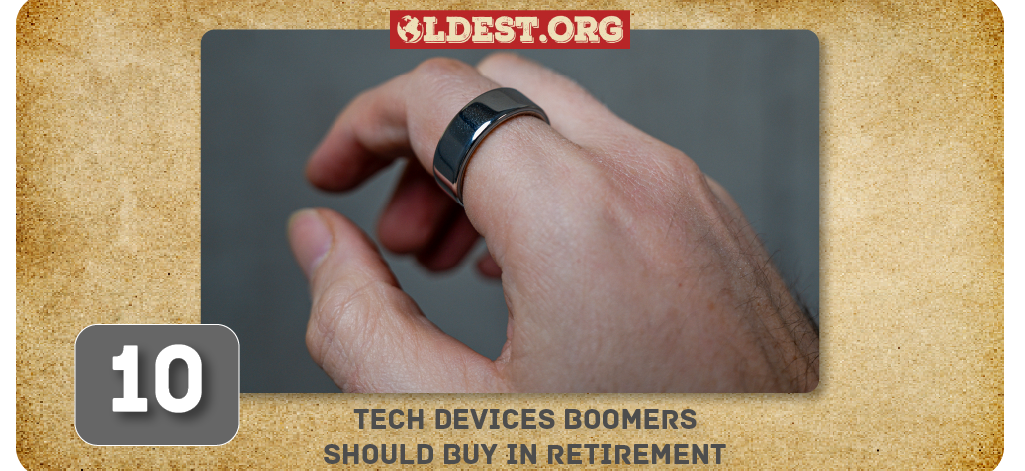
Retirement isn’t about slowing down—it’s about living smarter. While baby boomers might have conquered careers without the latest gadgets, today’s tech offers something previous generations never had: devices that quietly work in the background, keeping you healthier, safer, and more connected without requiring a degree. Here are 10 devices that prove technology isn’t complex, but it makes everyday life remarkably simpler.
10. Apple Watch Series 9
Source: imagineonline
Think of this as your personal health assistant that never clocks out. The Series 9 monitors your blood oxygen levels, tracks sleep patterns, and keeps tabs on your heart rate throughout the day. But here’s where it gets interesting: built-in fall detection can automatically alert emergency services if you take a tumble, while crash detection does the same if you’re in a vehicle accident. The emergency SOS feature means help is literally a button press away. It gently nudges you to move throughout the day without being annoying about it, and the best part? You don’t need to fumble with your phone to see who’s calling or check your messages. For $200 to $400, you’re basically wearing a tiny hospital monitoring station that happens to tell time.
9. HidrateSpark PRO Smart Water Bottle
Source: hidratespark
Staying hydrated sounds simple until you realize you’ve gone all day nursing the same cup of coffee. This smart bottle takes the guesswork out of water intake by syncing with an app that tracks every sip. Glowing LED lights remind you when it’s time to drink—no nagging required, just friendly visual cues. Why does this matter in retirement? Proper hydration keeps joints lubricated, improves circulation, and helps maintain cognitive function. At $60 to $80, it’s cheaper than a doctor’s visit for dehydration-related issues, and it turns something you should do into something you actually want to do.
8. Esky Wireless Keyfinders
Source: willowvendor
If you’ve ever been late to an appointment because your keys decided to play hide-and-seek, these little trackers are your new best friends. You get four trackers with a remote control that works up to 131 feet away. Attach them to keys, wallets, remotes, or even your reading glasses. Press a button, and the lost item beeps and lights up like a lighthouse. The batteries last three months, so you’re not constantly replacing them. For $20 to $30, you’re buying back the 15 minutes a day most people spend searching for misplaced items—and the stress that comes with it. It’s not just about finding stuff; it’s about maintaining punctuality and reducing unnecessary anxiety.
It is interesting to see how modern devices trace their roots back to the Oldest Technology Still In Use, showing how long-standing innovations still shape today’s digital tools.
7. Amazon Echo Show
Source: amazon
Imagine having a personal assistant who never takes a day off, complains, or judges your music choices. The Echo Show combines Alexa’s voice controls with a screen, making video calls with grandkids as easy as saying “Call Emily.” Set medication reminders, check the weather, display family photos, or control your thermostat—all without touching a single button. The screen adds a visual element that pure voice assistants lack, showing you recipes while you cook or pulling up news headlines while you have your morning coffee. Priced between $100 and $250, it’s particularly valuable for combating the isolation some retirees face, keeping you connected to family and the outside world through simple voice commands.
6. Kindle Paperwhite
Source: sixcolors
Book lovers know the struggle: reading in bright sunlight, carrying multiple hardcovers on vacation, or trying to read in bed without disturbing a sleeping partner. The Paperwhite’s glare-free screen works perfectly in direct sunlight and looks like actual paper rather than a harsh phone screen. Adjust the font size as large as you need without squinting, and carry thousands of books in a device lighter than a single paperback. The built-in light lets you read in complete darkness without disturbing anyone. Between $130 and $200, it’s perfect for those bucket-list trips where luggage space is premium, and it supports your reading hobby with an eye-friendly design that doesn’t cause the fatigue of traditional screens.
5. Medical Guardian MGMove Watch
Source: pcmag
This isn’t just another smartwatch—it’s a 24/7 lifeline designed specifically for seniors. The simplified menus mean you’re not scrolling through dozens of apps you’ll never use. The emergency SOS button connects you directly to professional monitoring services, not just your nephew who might be in a meeting. Whether you’ve fallen, feel chest pain, or just need immediate help, trained responders are standing by. For retirees living alone or whose adult children worry from afar, this watch provides tangible peace of mind. Starting at $200 plus a monthly subscription, it’s essentially professional-grade safety monitoring disguised as everyday wearable tech.
While technology continues to evolve rapidly, it is interesting to reflect on how far innovation has come since the era of the Oldest Computers in The World, which laid the foundation for today’s devices.
4. Hero Smart Dispenser
Source: herohealth
Memory isn’t what it used to be, and juggling multiple medications is where things can get dangerous. The Hero automates pill scheduling, dispensing the right medications at the right times while alerting caregivers if doses are missed. The locked storage means no accidental double-dosing or mixing up similar-looking pills. It’s particularly valuable for complex medication regimens where timing matters—blood pressure meds in the morning, blood thinners at night, supplements with meals. At $100-plus per month, it’s an investment in medication safety that prevents hospital visits from missed doses or dangerous overdoses. Think of it as a pharmacist living in your kitchen.
3. Oura Ring 4
Source: ouraring
For those who find watches bulky or uncomfortable, this discreet ring tracks heart rate variability, sleep stages, and recovery metrics without screaming “I’m wearing a health device!” It provides subtle wellness insights through its companion app, helping you understand patterns in your sleep quality and activity levels. The data helps you balance rest and movement—crucial for maintaining health in retirement when you’re no longer forced into a structured work routine. Between $300 and $500, it appeals to retirees who want health tracking without the watch aesthetic, offering sophisticated monitoring in a form factor you’ll actually wear consistently.
2. Universal Travel Adapter
Source: Canva
Retirement often means finally taking those international trips you postponed for decades. This compact adapter works in over 200 countries and includes USB and USB-C ports alongside traditional outlets. Built-in surge protection keeps your devices safe from voltage fluctuations abroad. For $20 to $30, it eliminates the stress of wondering whether your phone charger will work in Portugal or Japan. It’s small enough to slip into any carry-on but powerful enough to charge multiple devices simultaneously—perfect for keeping your phone, tablet, and camera ready for those bucket-list adventures.
1. Roomba Robotic Vacuum
Source: theverge
Retirement should mean less housework, not more time spent bent over pushing a vacuum. Modern Roombas navigate your home autonomously, learning the layout and cleaning on schedule whether you’re home or out. Voice and app controls mean you can start cleaning from your armchair. Many models self-empty, so you’re not constantly dealing with dustbins. Priced between $250 and $600 depending on features, these robots reduce the bending, lifting, and physical strain of traditional vacuuming while keeping floors consistently clean. It’s not lazy—it’s smart resource allocation of your time and energy.
A reminder of how far technology has come is evident when looking back at Oldest Hacking Incidents In Tech History, which shaped many of the security standards we now take for granted.
Conclusion
The beauty of these devices isn’t that they are flashy—it’s their simplicity in solving real problems boomers face in retirement. Each gadget addresses a specific challenge that one might face. With over 80% of seniors already owning smartphones or tablets, compatibility isn’t the barrier it once was. These tools work quietly in the background, letting you focus on what retirement should really be about—enjoying the freedom you’ve earned while staying connected, healthy, and safe.
The post 10 Tech Devices Boomers Should Buy in Retirement – Even If They Don’t Think They Need Them appeared first on Oldest.org.