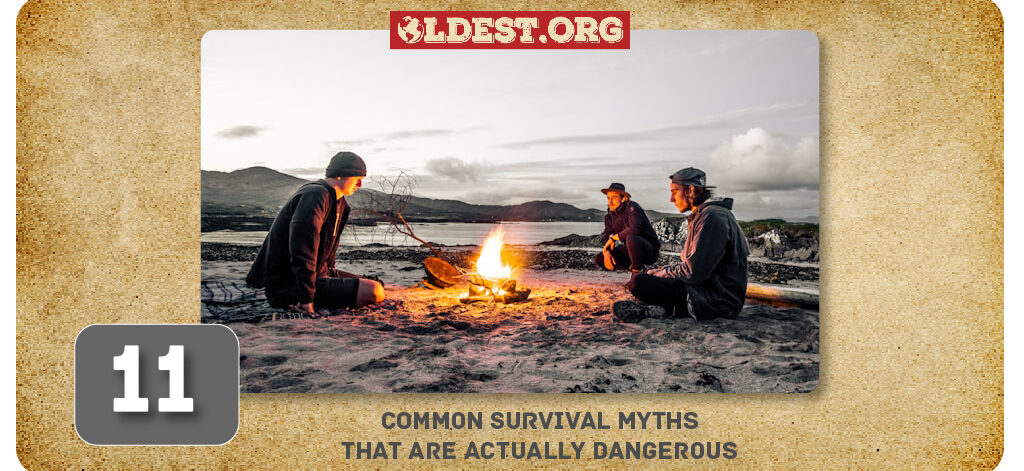
The uncomfortable truth about survival advice is that a surprising amount of what we think we know comes from movies, old TV shows, half-remembered school lessons, or that one confident friend who “watched a documentary once.”
A lot of the popular survival myths encourage risky behavior, false confidence, and choices that feel intuitive but are scientifically or practically wrong.
If you are curious, here are some of the top common survival myths that are actually dangerous (and not necessarily helpful).
1. “If You’re Lost, Just Keep Walking Until You Find Something”
Photo by Vitaly Gariev on Unsplash
This one sounds logical. Surely moving increases your chances of finding a road, a village, or help. In reality, this myth has led to countless people walking themselves into deeper trouble. When you are lost, especially in forests, deserts, mountains, or snow-covered terrain, walking aimlessly burns calories, dehydrates you faster, and increases injury risk. Worse, panic often causes people to walk in circles without realizing it. Our internal sense of direction is far less reliable than we think, particularly when stressed. In many environments, staying put is safer than wandering.
2. “You Can Survive for Weeks Without Food, So Hunger Isn’t a Big Deal”
Source: Canva
Yes, the human body can survive longer without food than without water. That fact often gets twisted into dangerous complacency. In cold environments, lack of calories accelerates hypothermia. In hot environments, weakness increases the risk of heat exhaustion. In any environment, low blood sugar can lead to poor judgment, which is often the real killer. Food matters not because starvation happens instantly, but because survival is a chain of decisions. Weakness breaks that chain faster than most people expect.
3. “Any Water Is Better Than No Water”
Source: Canva
This myth feels especially convincing when you are thirsty. A muddy puddle, a stagnant pond, or a slow-moving stream can look like salvation. Unfortunately, drinking untreated water can turn a bad situation into a medical emergency. Most natural water sources can contain bacteria, parasites, viruses, and chemical contaminants. In survival scenarios, diarrhea and vomiting are not minor inconveniences. They cause rapid dehydration, electrolyte imbalance, and weakness. You can die faster from contaminated water than from temporary thirst.
4. “Moss Always Grows on the North Side of Trees”
Source: Canva
This is one of the most persistent navigation myths, taught to generations of schoolchildren and reinforced by survival fiction. It is also unreliable to the point of being dangerous. Moss grows where conditions are favorable: moisture, shade, and suitable bark. While it may be more common on the north side in some regions, it can grow on any side of a tree depending on local conditions. Relying on this myth can give you false confidence and send you walking the wrong way for hours.
For a reminder of how balance truly works in the wild, explore why nature is perfect, showcasing the systems and patterns that make the natural world both resilient and awe-inspiring.
5. “You Should Always Build a Fire Immediately”
Source: Canva
The reality is that fire can be dangerous, wasteful, or even illegal depending on conditions. In dry environments, an uncontrolled fire can spread rapidly and put you at serious risk. In windy or wet conditions, attempting to start a fire may burn precious energy with little payoff. In some survival situations, staying hidden or conserving resources matters more than visible flames.
6. “If an Animal Attacks, Playing Dead Always Works”
Source: Canva
Playing dead can be effective in very specific situations, such as certain bear encounters under specific conditions. But applying this advice universally is dangerous. Predators behave differently depending on species, context, and motivation. Playing dead with a territorial animal may provoke further attack. Doing so with a curious or hungry predator can make you seem like easy prey. Blindly following this myth removes your ability to adapt, which is often your greatest asset.
7. “Pain Means You Should Push Through at All Costs”
Source: Canva
Survival stories often glorify pushing through pain as a mark of strength. In real emergencies, ignoring pain can be fatal. Pain signals injury, overexertion, dehydration, or exposure. For example, continuing to walk on an injured ankle can lead to a fall or permanent damage. Ignoring early hypothermia symptoms because “it’s not that cold yet” can result in confusion and loss of coordination. Knowing when to stop is not weakness but situational awareness.
8. “Shelter Can Wait Until Later”
Source: Canva
People often underestimate how quickly exposure can kill. Cold, heat, wind, rain, and sun are not background conditions. They actively drain energy and impair judgment. Without protection from the elements, everything else becomes harder. You burn calories faster, lose water more quickly, and struggle to think clearly. Shelter is more about “buying time” and when you are in a survival situation, time is your most valuable resource.
9. “You Can Rely on Adrenaline to Get You Through”
Source: Canva
Adrenaline masks pain, fatigue, and injury. It can make you feel capable long after your body is not. When it wears off, the crash can be sudden and severe. People who overextend themselves during an adrenaline surge often collapse later, sometimes in worse conditions than before. Counting on adrenaline encourages impulsive choices and overconfidence. The calm, unglamorous moments matter far more than the dramatic ones, often becoming fatal.
To see real-world survival challenges, check out the toughest places to survive, highlighting extreme environments where nature pushes human endurance to its absolute limits.
10. “If Help Hasn’t Arrived Quickly, It Probably Isn’t Coming”
Source: Canva
This myth pushes people into desperate actions too soon. Rescue operations often take time due to weather, terrain, and limited information. Assuming you have been forgotten can lead to risky attempts to self-rescue that make the situation worse. Those who leave safe positions prematurely often move away from search areas, complicating rescue efforts. On the contrary, many survivors are found days later because they stayed visible, conserved energy, and made themselves easier to locate.
11. “Survival Is Mostly About Toughness”
Source: Canva
This might be the most dangerous myth of all. It frames survival as a test of grit rather than judgment. Toughness helps, but it is not enough. Many experienced outdoors people get into trouble not because they lack strength, but because they made poor decisions early on. Ignoring weather forecasts, underestimating terrain, overestimating skills, or refusing to turn back are common causes of emergencies. Survival is about adaptability, humility, and problem-solving.
Final Words
Dangerous myths persist because they offer simple answers to complex problems. They feel empowering. They give us the illusion of control. But real safety comes from questioning assumptions, observing carefully, and choosing restraint over impulse. The next time you hear a piece of survival advice that sounds dramatic, absolute, or heroic, pause. Ask where it comes from. Ask whether it applies to all situations or just a few. Ask whether it reduces risk or merely feels bold.
The post 11 Common Survival Myths That Are Actually Dangerous appeared first on Oldest.org.