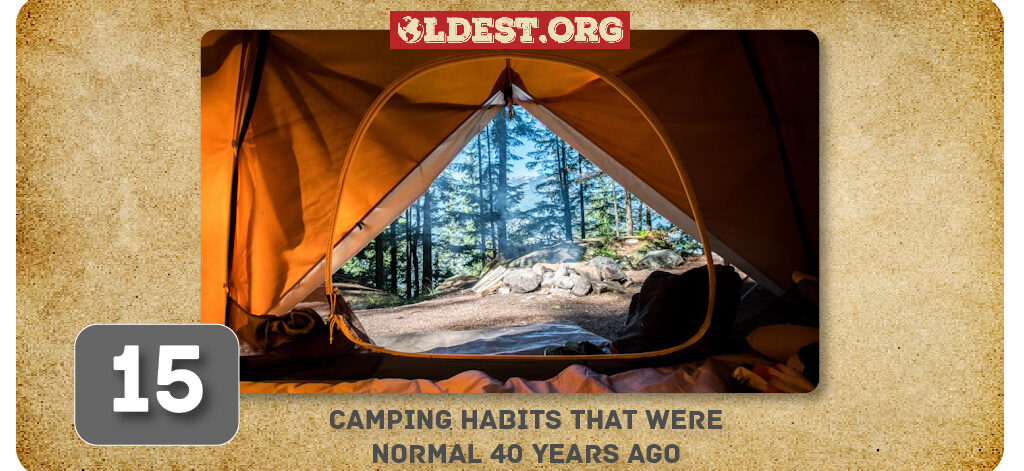
Camping today is polished. You book sites online, follow campground rules printed in neat PDFs, and pack gear that looks like it came straight out of a sci-fi catalog. Solar lanterns, GPS watches, ultralight tents, portable espresso makers. Comfort is no longer a bonus. It is the baseline.
But go back about 40 years, and camping had a very different personality. It was scrappier. Louder. Slightly chaotic. You learned by doing, often the hard way. You didn’t expect convenience, and you definitely didn’t expect things to go exactly as planned.
Below are 15 unique camping habits that were normal 40 years ago and are almost unthinkable today.
1. Pitching a Tent Without Instructions (or Stakes That Matched)
Photo by ooneiroslyl on Unsplash
Back then, tents didn’t come with color-coded poles, QR codes, or YouTube tutorials. You pulled everything out of the bag, stared at it for a while, and figured it out as a group. Often with arguments. The process was slow, messy, and oddly bonding. Everyone had a role, even if that role was just holding a pole and being yelled at. By the time the tent was standing, you felt like you had accomplished something real.
2. Packing Whatever Was Around the House
Photo by Museums Victoria on Unsplash
Camping gear used to be a loose concept. People packed what they already owned. Old blankets instead of sleeping bags. Kitchen pots instead of camping cookware. Flashlights from the junk drawer. A cooler borrowed from a neighbor. Folding chairs that pinched fingers. If it worked at home, it worked in the woods. This made camping feel more accessible and less like a specialized hobby you had to invest heavily in.
3. Cooking Entire Meals Over an Open Fire
Source: Canva
Before compact stoves and dehydrated meals became mainstream, most campsite cooking happened directly over fire. Cast iron pans, skewers, foil packets, and sheer guesswork ruled the menu. You cooked everything from eggs to stew over flames that refused to behave. Burnt on the outside, undercooked on the inside was a common outcome.
4. Drinking Straight from a Stream (Sometimes)
Source: Canva
Forty years ago, water purification wasn’t always top of mind. Many campers trusted clear mountain streams without filters or tablets, especially if they had grown up doing the same. Was it always safe? Not necessarily. But there was a strong belief in nature’s purity and a sense that your body would adapt.
Many of these experiences happen in the most visited national parks in the U.S., where crowds have reshaped outdoor traditions.
5. Letting Kids Roam Completely Unsupervised
Source: Canva
One of the biggest differences between then and now was freedom. Kids at campsites wandered far. They explored trails, climbed rocks, fished alone, and disappeared for hours, returning only when hungry or sunburnt. Parents trusted the environment, the community, and the kids themselves. There were fewer rules, fewer warnings, and less constant monitoring.
6. Using Paper Maps (and Guessing a Lot)
Source: Canva
GPS wasn’t a thing. Phones weren’t a thing. Navigation meant paper maps, road signs, and asking strangers for directions. You unfolded massive maps on car hoods, traced routes with your finger, and hoped nothing had changed since the map was printed. Getting lost was common and often accepted as part of the trip.
7. Campsites Without Reservations or Time Slots
Photo by Dave Hoefler on Unsplash
Forty years ago, many people just showed up. You drove until you found a good spot. If it was taken, you moved on. There was less emphasis on booking months in advance and more on spontaneity. Camping felt less curated and more organic.
8. Using Ice Chests That Barely Worked
Photo by Damien Dufour on Unsplash
Coolers were basic, bulky, and unreliable. Ice melted fast, food got soggy, and you learned quickly what could survive a few days without refrigeration. Canned goods, bread, and foods that didn’t mind a little warmth were staples. Modern coolers can keep ice frozen for days. Back then, managing food was a constant balancing act that required creativity and compromise.
9. Wearing Cotton Everything
Source: Canva
Today we know better. Cotton gets wet, stays wet, and makes you cold. But 40 years ago, cotton was king. Jeans, sweatshirts, flannel shirts. People camped in everyday clothes, not moisture-wicking layers engineered for performance. Back then, you dried clothes by the fire, accepted discomfort, and moved on.
In extreme cases, repeated damage has pushed some landmarks onto the list of historic U.S. sites closed to the public.
10. Sitting Around the Fire for Hours Doing Nothing
Source: Canva
One of the most beautiful habits of old-school camping was unstructured time. People sat around the fire with no agenda. No phones. No playlists. Just conversation, silence, staring at flames, and telling the same stories over and over. It created space for reflection, laughter, and connection. You simply existed.
11. Trusting Campground Neighbors Instinctively
Photo by Laurensius Yudhistira on Unsplash
Campsites felt like temporary communities. People borrowed matches, shared food, watched each other’s kids, and struck up conversations without hesitation. There was an unspoken trust that everyone was there for the same reason. While this still happens today, it was more common back then, before heightened concerns about safety and privacy shaped how we interact with strangers.
12. Ignoring Weather Forecasts Entirely
Source: Canva
Weather apps didn’t exist. Forecasts came from radio reports or local knowledge, and they weren’t always accurate. You packed based on instinct and experience. If it rained, you dealt with it. If it got cold, you layered up with whatever you had. Somehow, the unpredictability added to the adventure, building resilience in people.
13. Using One Flashlight for the Entire Group
Source: Canva
Lighting was limited. A single heavy flashlight, maybe two, served an entire campsite. Lanterns were bulky and dim. You planned activities around daylight and learned to navigate darkness carefully. Back then, darkness was respected, even embraced. It made nights quieter, more intimate, and a little mysterious.
14. Leaving the Campsite Exactly as You Found It (Without Talking About It)
Source: Canva
The “leave no trace” philosophy existed long before it became a formal movement. People cleaned up after themselves because it was expected, not because it was posted on a sign. You didn’t leave trash because you didn’t want to be that person. This sense of responsibility came from shared values rather than enforced rules.
15. Treating Discomfort as Part of the Story
Source: Canva
Perhaps the biggest difference of all was mindset. Camping wasn’t supposed to be easy. You expected bugs, cold nights, sore backs, and minor mishaps. These weren’t failures. They were stories in the making. People laughed about things going wrong. They adapted. They remembered the trip fondly, not because it was perfect, but because it was real.
Final Words
Camping has evolved, and for good reasons. It’s safer, more inclusive, and more accessible than ever before. Better gear allows more people to enjoy the outdoors comfortably, and that’s something worth celebrating. Back in the day, camping used to be less about control and more about surrender. Less about preparation and more about presence.
The post 15 Camping Habits That Were Normal 40 Years Ago appeared first on Oldest.org.