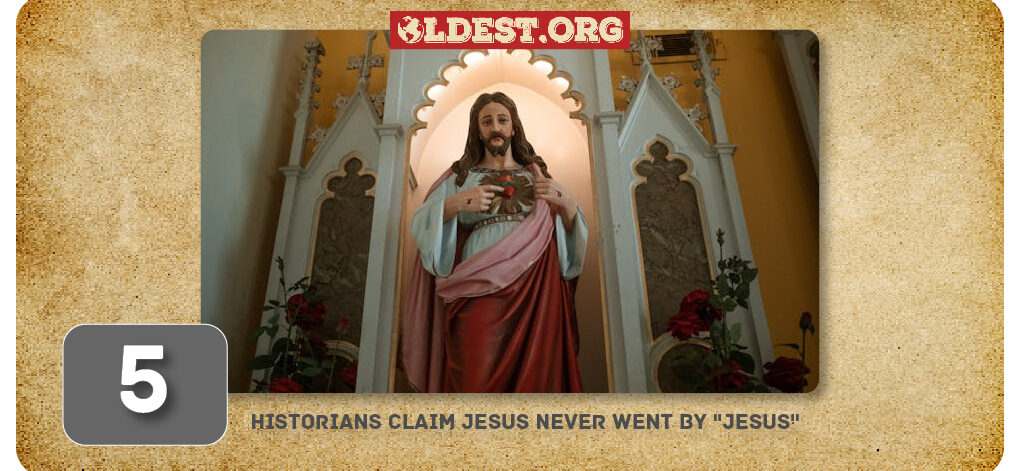
If you’ve ever wondered about the origins of familiar biblical names, you’re not alone. The name “Jesus” is spoken millions of times daily across the globe, anchoring prayers, hymns, and conversations about faith. But here’s something that might surprise you: the man we call Jesus never actually heard that name during his lifetime.
Historians and linguists agree that the English “Jesus” is the product of centuries of translation and linguistic evolution—not the name his mother called him, or the name his disciples used when they walked the dusty roads of Galilee. So what did they actually call him? Here’s the journey of a name that traveled through languages, cultures, and time.
The Name That Started It All
In first-century Judea, the historical figure we know today would have been called Yeshua—or in some Aramaic dialects, Yeshu. This wasn’t a unique or particularly rare name; it was actually pretty common. Imagine walking through ancient Nazareth and calling out “Yeshua”—multiple heads might have turned.
The name carries a beautiful meaning: it stems from a Hebrew root meaning “to save” or “to deliver,” and scholars often translate it as “Yahweh saves” or simply “salvation.” It’s a shorter form of Yehoshua—the name we know in English as Joshua. Both names share the same hopeful message woven into their syllables.
How Did Yeshua Become Jesus?
Source: Canva
The transformation from Yeshua to Jesus didn’t happen overnight—it unfolded across centuries and languages, each adding its own twist.
The Greek Chapter
Here’s where things get interesting. When early followers started writing about Yeshua’s life and teachings, they did it in Greek—the common language of the eastern Mediterranean at the time. But Greek doesn’t have the same sounds as Hebrew or Aramaic, so Yeshua got a makeover. It became ‘Iēsous’ (Ἰησοῦς), not because anyone was trying to rename him, but simply because that’s how the name adapted to Greek pronunciation. Think of it like how ‘José’ becomes ‘Joseph’ when you cross from Spanish to English. Same person, different linguistic packaging.
Human communication has evolved over millennia, and exploring the oldest spoken languages in the world reveals how ancient tongues still influence modern speech.
The Latin Turn
Source: Canva
As Christianity spread westward into the Roman Empire, the Greek ‘Iēsous’ made another leap—this time into Latin. The Romans wrote it as ‘Iesus,’ and this version stuck around for centuries. Latin was the language of the church, of scholarship, of power. Every Bible, every prayer, every theological debate used ‘Iesus.’ This wasn’t just a translation quirk anymore; it was becoming the standardized form that would eventually morph into the name we recognize today.
Enter the Letter J
Plot twist: the letter ‘J’ didn’t even exist in its current form until relatively recently. During the 16th and 17th centuries, English orthography went through some major changes. The letter ‘I’ started splitting into two distinct letters—’I’ and ‘J’—each with its own sound. That’s when ‘Iesus’ finally became ‘Jesus’ in English. It wasn’t a conscious decision to change anyone’s name; it was just the natural evolution of how English speakers wrote and pronounced words. So the ‘Jesus’ you know is really the product of Early Modern English spelling reforms, not some ancient, original form.
More Than Just a Name
Source: Canva
Back in Yeshua’s time, people didn’t use surnames the way we do. Instead, they identified themselves through family or geography. So you might hear:
Yeshua of Nazareth – identifying his hometown
Yeshua bar Yosef – “son of Joseph,” marking his lineage
These weren’t just technical identifiers—they told a story about where someone belonged, who their people were, and where they came from.
What About “Christ”?
Source: Canva
And what about ‘Christ’? That’s not a last name—it’s a title. ‘Christ’ comes from the Greek ‘Christos,’ which translates to the Hebrew ‘Mashiach’ (Messiah), meaning ‘the anointed one.’ So ‘Jesus Christ’ is really ‘Yeshua the Messiah’ in its original context. It’s like calling someone ‘Alexander the Great’—the second part tells you something about them, not what their mom called them at dinner.
The Name Across Cultures
What’s fascinating is how different religious and cultural traditions have preserved their own versions of this name:
Aramaic Christian communities still use forms like Ishoʿ or Eashoa, maintaining direct linguistic connections to the original.
Islamic tradition refers to him as Isa, the Arabic rendering of the same name.
Jewish sources sometimes reference Yeshu in historical and religious texts, though often in different theological contexts.
Each tradition has carried the name through its own linguistic lens, but they all point back to the same historical figure.
Does It Really Matter?
Source: Canva
You might be wondering: if “Jesus” isn’t historically accurate, should we stop using it? The truth is, language naturally evolves. Every culture translates and adapts names—that’s how communication works across borders and centuries.
What historians emphasize isn’t that we’ve been “wrong” to use “Jesus,” but rather that understanding the name’s journey enriches our grasp of history. Knowing that Yeshua was the name spoken in Galilee connects us more directly to the historical context—the real people, real places, and real moments of first-century Judea.
Some faith communities today deliberately use Yeshua or other original forms to emphasize that connection. Others stick with “Jesus,” the familiar form that’s been spoken in English for centuries. Both choices honor the same person; they just reflect different priorities about language and tradition.
Centuries of paintings shaped a familiar image, but historical evidence suggests a very different reality—something explored in why history says Jesus didn’t look like Western art shows.
The Journey Of A Name
In the 1st century CE, he was simply Yeshua or Yeshu, walking the dusty roads of Galilee. By the 2nd through 4th centuries, Greek texts were calling him Iēsous, and Syriac Christians were using their own Aramaic forms. Fast forward to the 16th and 17th centuries, and English-speaking Christians finally start writing ‘Jesus’ as the J-sound solidifies in the language. It’s a journey spanning continents and centuries, all because languages refuse to stand still.
Conclusion
Why does this matter? Understanding the name’s evolution gives us a glimpse into how history, language, and culture shape the way we talk about even the most familiar figures. Yeshua becoming Jesus wasn’t the result of deception but the natural shifts that happen when sounds, alphabets, and tongues travel across time and place. Whether you say Yeshua, Iēsous, or Jesus, you’re referring to the same historical figure whose influence spread far beyond his small, ancient world — and that linguistic journey is itself an illuminating piece of history.
The post Historians Claim Jesus Never Went by “Jesus” — Here’s What He Was Really Called appeared first on Oldest.org.