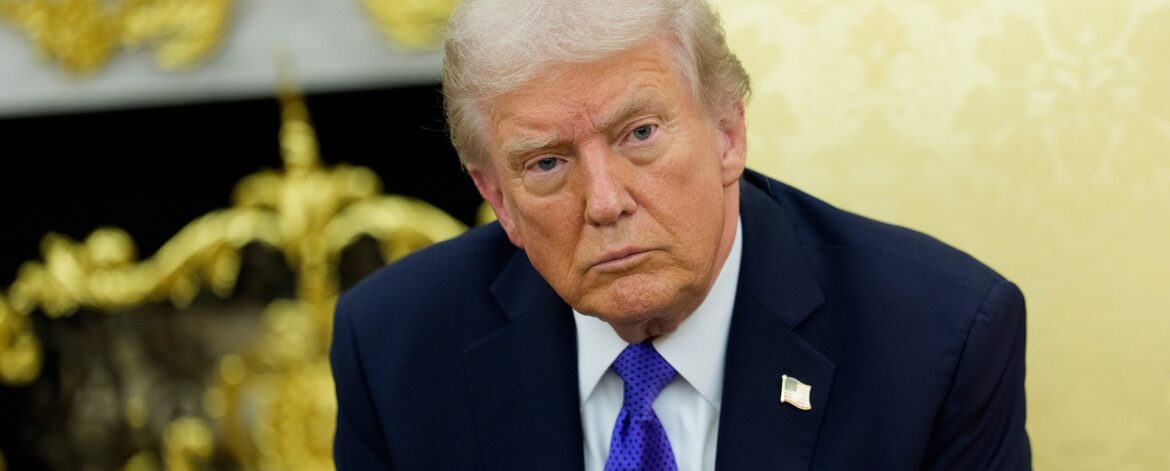
In a move that has stunned global leaders, President Donald Trump has directed the Pentagon to resume nuclear weapons testing—officially ending a 33-year pause, dating back to the Cold War. Announced just hours before a high-stakes meeting with Chinese President Xi Jinping, the order signals a major shift in U.S. nuclear policy and raises urgent questions about the stability of global security.
Breaking Decades Of Silence
Source: Canva
The United States hasn’t conducted a live nuclear weapons test since 1992, when President George H.W. Bush ordered the final detonation as the Cold War wound down. For over three decades, America has relied on sophisticated computer simulations and subcritical experiments—tests that don’t produce nuclear chain reactions—to maintain its arsenal. That era officially ended on October 29, 2025, when Trump announced that the Pentagon would resume testing “immediately.”
The timing wasn’t coincidental. Trump made the announcement mere hours before sitting down with Xi Jinping in Busan, South Korea, turning what could have been routine diplomacy into a high-stakes power play.
For a lighter take on the past, enjoy these clever History Jokes that make learning fun.
Why Now? The Race for Nuclear Supremacy
Source: Canva
Trump’s justification centers on one core argument: America’s rivals aren’t standing still. According to the president, both Russia and China have ramped up their nuclear programs significantly, forcing the U.S. to respond in the same way.
The numbers tell a compelling story. China’s nuclear warhead stockpile has surged past 600 weapons, with projections suggesting they’ll exceed 1,000 by 2030. While the United States currently maintains the world’s largest nuclear arsenal, Trump warned that China could achieve parity within just five years if current trends continue.
Russia hasn’t been sitting idle either. Recent reports confirm Moscow has been testing a nuclear-powered cruise missile and a nuclear-powered torpedo—exotic weapons systems that blur the lines between conventional deterrence and nuclear brinkmanship.
Trump framed the decision in stark terms: the U.S. must test “on an equal basis” with other nuclear powers or risk falling behind in the global balance of power.
Now the biggest question that’s running in our minds is, what kind of tests are we talking about here?
Trump’s announcement didn’t specify exactly what form these tests would take place. Would we see actual nuclear explosions at the Nevada Test Site, like the dramatic mushroom clouds of decades past? Or would the Pentagon focus on flight testing nuclear-capable missiles without detonating warheads?
The distinction is what matters the most. Full-scale nuclear detonations would represent a far more aggressive posture and generate significantly more international backlash than missile tests. As of now, the Pentagon hasn’t clarified which path it plans to pursue, leaving analysts and foreign governments trying to decode and interpret America’s intentions.
Global Stance & Strategic Concerns
Source: Canva
Predictably, the announcement didn’t go over well on the world stage. Russia condemned the decision as fundamentally destabilizing, accusing Washington of inviting a new nuclear arms race. Chinese officials called the move reckless and provocative, arguing it undermines decades of diplomatic efforts toward arms control.
Arms control experts are sounding even louder alarms. Many warn that resuming nuclear testing after 33 years could trigger a domino effect, encouraging other nations to abandon restraint and modernize their arsenals through live testing. The fear is simple: once one country breaks the order, others will follow, unraveling the fragile web of treaties and norms that have kept nuclear weapons in check since the Cold War.
The decision also raises questions about America’s commitment to the Comprehensive Nuclear-Test-Ban Treaty, which the U.S. signed in 1996 but never ratified. While technically not bound by the treaty, the U.S. has honored its spirit for decades, which is now officially over.
The Geopolitical Game Of Chess
Trump’s announcement wasn’t made in a vacuum. It came as he prepared to meet Xi Jinping face-to-face—a detail that underscores the symbolic weight of the decision. By declaring America’s intent to resume testing just before sitting down with China’s leader, Trump sent an unmistakable message about American resolve and power.
The president has repeatedly called for trilateral arms control talks between the U.S., Russia, and China, arguing that any meaningful limits on nuclear weapons must include all three powers. Beijing has consistently rejected these overtures as unrealistic, insisting its arsenal is far smaller than America’s or Russia’s and doesn’t warrant equal treatment in negotiations.
By ordering tests to resume, Trump appears to be applying pressure—essentially saying, “If you won’t negotiate, we’ll build and test until you do.”
What’s more interesting is that, for more than three decades, the U.S. has maintained its nuclear deterrent through the Stockpile Stewardship Program, which uses supercomputers to simulate nuclear explosions with stunning accuracy. Scientists have been able to verify that America’s warheads remain reliable without ever detonating one.
This shift from simulation back to live testing represents more than a technical change—it’s a philosophical one. It signals that the U.S. no longer believes virtual demonstrations are sufficient to deter adversaries or maintain strategic credibility. In an era of heightened geopolitical tensions, Trump evidently believes America needs to show, not just tell.
What’s To Happen Next?
Source: Canva
The immediate future remains uncertain. The Pentagon will need to prepare testing facilities, coordinate with the Department of Energy, and work through complex logistical and safety protocols. If full-scale detonations are planned, sites like the Nevada Test Site would need to be reactivated after decades of dormancy.
Internationally, expect fierce debates at the United Nations and heated discussions among NATO allies, many of whom oppose nuclear testing on principle. Some allies may publicly distance themselves from the decision, creating friction within Western security partnerships.
Perhaps most importantly, watch how Russia and China respond. If either nation accelerates its own testing program in reaction, Trump’s decision could indeed spark the arms race that critics and governments fear—a play for ultimate power, with stakes that couldn’t be higher.
Discover the pivotal moments that shaped a nation in Battles That Defined American History.
Conclusion
Trump’s directive represents a pivotal moment for international security and nuclear diplomacy. Whether it strengthens America’s strategic position or reignites global tensions remains uncertain. One thing is clear: the geopolitical landscape has entered a more volatile phase, and the ripple effects of this decision could shape the balance of power for years to come.
The post Trump Instructs Pentagon To ‘Immediately’ Start Testing US Nuclear Weapons appeared first on Oldest.org.