A long-delayed NASA mission, which is aimed at studying the
upper reaches of the Earth’s atmosphere, has just launched.
The Ionospheric Connection
Explorer (ICON) spacecraft was launched last
night (October 10) at 10:00 p.m. EDT.
It was released in midair from a Stargazer L-1011 carrier
plane which was carrying an impressive payload of the ICON
spacecraft aboard a Northrop Grumman Pegasus XL
rocket.
RELATED: USING MATH TO MAKE NASA
SPACECRAFT LIGHTER AND MORE DAMAGE TOLERANT[1]
The ionosphere
ICON will study the planet’s ionosphere.
As Space.com[2] writes, this
is an enormous layer of Earth’s atmosphere that overlaps with
the boundary of space.
The spacecraft’s measurements will help scientists better
understand how space weather conditions affect terrestrial
weather.
“ICON has an important job to do – to help us understand the
dynamic space environment near our home,” Nicola Fox, director for
heliophysics at NASA HQ in Washington, said in a NASA blog post[3].
“ICON will be the first mission to simultaneously track what’s
happening in Earth’s upper atmosphere and in space to see how the
two interact, causing the kind of changes that can disrupt our
communications systems.”
Understanding the Earth’s atmosphere
As Space.com points out, the International Space
Station (ISS) and other important satellites pass through the
ionosphere. It is a turbulent layer of the Earth’s
atmosphere.
Radio waves and Global Positioning System (GPS) signals
are sent through this layer, and these signals can be distorted by
patches of ionized material.
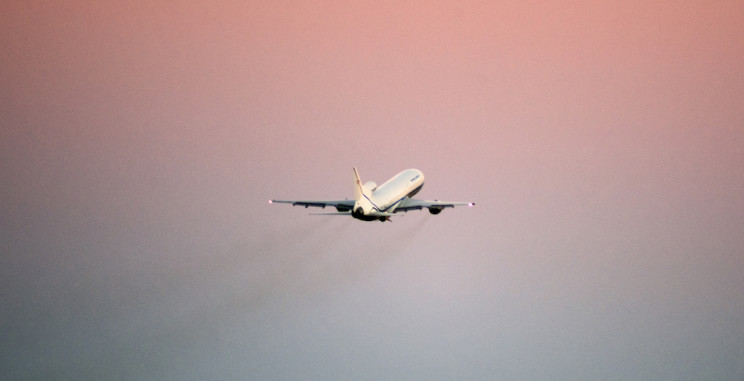 Stargazer L-1011. Source:
NASA[4]
Understanding how, and when this will happen can lead to better
satellite communications. Auroras and geomagnetic storms are
also created in this area and ICON should provide insight into
these phenomena.
The $252 million ICON spacecraft was flown up to the ionosphere
by a Northrop Grumman Pegasus XL rocket that detached
from a Stargazer L-1011 aircraft.
The mission was originally scheduled to launch in 2017 but
was delayed due to issues related to the Pegasus XL
rocket.
It is equipped with several instruments that will measure
winds and particles, as well as the density of the atmosphere’s
chemical composition.