While you may only vote every few years, politics affects your life every
day[1]. For this reason, it can
be argued that we should all improve our understanding and
appreciation for it.
Likewise, you might want to also consider integrating some
philosophy while you are at it[2]!
You can even benefit professionally by studying a little
political science! Who knows, you might also find your calling and
run for office to affect public policy[3]?
RELATED: EXPLORE 15 ENGINEERING DEGREES
OUT THERE: WHAT’S THE BEST FIT FOR YOU?[4]
What do you need to study political science?
There are usually no requirements[5]
to have any prior experience in political science to study it. All
you really need is a spark of interest and a lot of
patience.
But what is it? Political science is “a social
science concerned chiefly with the description and analysis of
political and especially governmental institutions and processes,”
according to Merriam Webster[6].
Political science courses offer a wide range of courses
with different specializations. While at its core, it is the study
of politics, political science goes much further.
It looks into various forms of government from the many
countries of the world, past, and present. Political science tends
to cover things like (credit to enotes.com[7]):
- The factors that cause people to vote a certain way in
elections, - Public confidence in the governing structures,
and; - Divisions within electorates that help to understand the
perceptions of different ethnic groups or socioeconomic classes
toward various issues and politicians.
To name but a few.
By studying political sciences, you will get a broader
“birds-eye” view of politics and the wide-ranging impact it has on
societies.
Seven reasons you should study politics and political
sciences
You may or may not care about politics, but there are some
reasons you should at least have an appreciation for it. After all,
as the famous saying goes, “you might not care about politics, but
it certainly cares about you!”
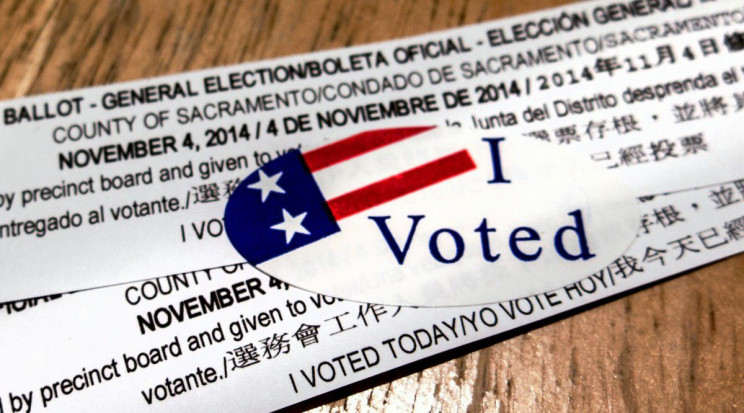 Source:
1. Politics impacts every aspect of your life
Like it or not, government and politics have a major impact on your life[9] — both as a private
citizen and as a professional.
Politics affects how much of your hard-earned money you
keep through taxes to the sorts of things you can buy. Since it is
so all-pervasive, you really should take the time to understand the
process and arguments put forward by prospective leaders and
parties.
Who are the people who are making these laws I’m supposed
to follow? How would their campaign promises affect me if they got
into power?
By educating yourself about some aspects of politics, it will
enable you to make more informed decisions when you vote. This is a
very important decision and will affect you, your family, and
friends in the future on a wide range of issues.
This is inextricably linked to a good foundation in philosophy,
as well. By discovering what is important to you (like smaller
government, fewer taxes, less government interference, etc.), you
will learn to vote with your head and not your heart.
2. As a voter, you are obliged to be informed
Your right to vote has been hard-won in blood and
struggle. For this reason, it is your duty as a citizen to have
your voice heard at the ballot box.

Source: Daniel/pexels[10]
Regrettably but understandably, according to a
2015 PBS news article[11] found that the 2016
presidential election accounted for only 58% of
eligible voters despite being a record voter turnout in recent
years.
But just turning up to vote is not enough. You should take
the time to arm yourself with the facts. Listen to the arguments,
read the manifestos of parties, and make a level-headed
choice.
After all, “every nation gets
the government it deserves[12].” Don’t like what they
are doing? Punish them at the next election.
Of course, it is not possible to read every single news
article or television interview from a candidate. But by doing
some independent research, you can quickly find out who is telling
the truth and who is relying solely on rhetoric (which is all too
common).
It is also worthwhile getting a balanced diet[13] for your political
news. Most media sources are biased in one direction, so be sure to
get the other side of the argument too.
You will then be better placed to balance the arguments
for yourself.
3. Grab the popcorn; politics can be great fun to watch
and learn about
We are certainly going through some turbulent times in
global politics. Establishment shaking events like Brexit and the
election of Donald Trump to the Yellow Vest movement in France[14] has turned
something rather bland into a nail-biting rollercoaster
ride.
Of course, it might not be as exciting as a night out with your
best buddies, but the battle of wits and powerplays in politics can
certainly be very gripping indeed.
Being a spectator can be both exciting and infuriating in equal
measures. Political debates can be incredibly interesting,
especially if you have some knowledge of the subject at hand and
have a grasp of logical fallacies[15].
Once you have an understanding of terms like ad
hominem, strawman arguments, and non-sequitur, you
will quickly discover which prospective candidate or campaign is
“least dishonest.”
4. Politics lets you know your rights
Politicians are the servants of the people, not the other
way around. This is, sadly, all too easily forgotten by those who
lust for power.
By having a grasp of the subject at hand, and being safe
in the knowledge that by voting you have a say in the running of
things, you will feel more invested in society and the country at
large.
If you don’t like the way things are being run, rally your
friends and family to change things at election time.
It is very easy to fall into the trap that “all
politicians” are the same, and for “career politicians[16],” there is certainly a
good argument for that. Try to resist this urge and find candidates
who best align with your core values.
You might also want to consider taking a political
compass[17] test.
5. You will gain some useful skills too
Political science courses usually encompass many different
approaches to the topic. They tend to train you in many critical
skills that are readily-transferable to your career.
You will develop your writing skills, quantitative
reasoning, and develop a way to assess statistical
arguments.
Political theory courses also tend to train you in
analytical thinking, which is an essential skill for almost all
attractive careers.
6. It will help you, professionally and
financially
Knowledge of political science can be extremely valuable
to individuals.
“Business executives, for example, need to have some
understanding of the likely trajectory of policy and politics in
China or Europe as well as in the United States in order to make
wise investment decisions.” – Boston University[18].
Many political science alumni have found success in many
different professions and organizations. Many CEOs of Fortune 500 companies[19], for example, have
political science majors.
7. It will hone your debating skills
Politics and political science[20] are all about reasoned
argument and debate (at least that’s the theory – see point 3
above). By studying political sciences, you will be required to
examine, discuss, and debate many issues.
This process will hone your ability to form an argument and
demand you to defend your position. It will also force you to
analyze your own personally held beliefs and
presuppositions. You might be wrong!
For this reason, political sciences will better equip you in
your professional life to defend your point of view on various
aspects of your working life.
References
- ^
politics
affects your life every day
(interestingengineering.com) - ^
philosophy while you are at it
(interestingengineering.com) - ^
office to affect public policy
(engineering.dartmouth.edu) - ^
RELATED: EXPLORE 15 ENGINEERING
DEGREES OUT THERE: WHAT’S THE BEST FIT FOR YOU?
(interestingengineering.com) - ^
usually no requirements
(www.umultirank.org) - ^
Merriam Webster
(www.merriam-webster.com) - ^
enotes.com
(www.enotes.com) - ^
pxhere
(pxhere.com) - ^
major impact on your life
(www.everyvotecounts.org.uk) - ^
Daniel/pexels
(www.pexels.com) - ^
PBS news article
(www.pbs.org) - ^
every nation gets
the government it deserves
(medium.com) - ^
balanced diet
(www.good.is) - ^
Yellow Vest movement in France
(www.bbc.co.uk) - ^
logical fallacies
(thebestschools.org) - ^
career politicians
(ngu-vision.squarespace.com) - ^
political compass
(www.politicalcompass.org) - ^
Boston University
(www.bu.edu) - ^
CEOs of Fortune 500 companies
(www.globalexperiences.com) - ^
Politics and political science
(www.algomau.ca)