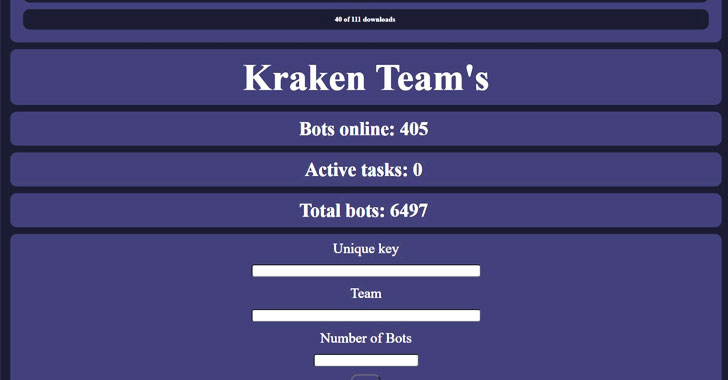
Cybersecurity researchers have unpacked a new Golang-based
botnet called Kraken that’s under active
development and features an array of backdoor capabilities to
siphon sensitive information from compromised Windows hosts.
“Kraken already features the ability to download and execute
secondary payloads, run shell commands, and take screenshots of the
victim’s system,” threat intelligence firm ZeroFox said[1]
in a report published Wednesday.
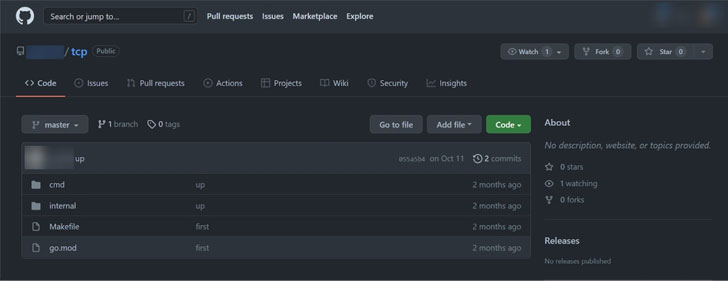
Discovered first in October 2021, early variants of Kraken have
been found to be based on source code uploaded to GitHub, although
it’s unclear if the repository in question belongs to the malware’s
operators or if they simply chose to start their development using
the code as a foundation.
The botnet – not to be confused with a 2008 botnet[2]
of the same name – is perpetuated using SmokeLoader[3], which chiefly acts as a
loader for next-stage malware, allowing it to quickly scale in size
and expand its network.
Kraken’s features are said to be constantly evolving, with its
authors fiddling with new components and altering existing
features. Current iterations of the botnet come with functions to
maintain persistence, download files, run shell commands, and steal
from different cryptocurrency wallets.
The wallets targeted include Armory, Atomic Wallet, Bytecoin,
Electrum, Ethereum, Exodus, Guarda, Jaxx Liberty, and Zcash. Also
consistently downloaded and executed on the machine is the RedLine Stealer[4], which is used to
harvest saved credentials, autocomplete data, and credit card
information from web browsers.
What’s more, the botnet comes with an administration panel that
enables the threat actor to upload new payloads, interact with a
specific number of bots, and view command history and information
about the victims.
Over time, Kraken has also emerged as a conduit for the
deployment of other generic information stealers and cryptocurrency
miners, netting the botnet operators around $3,000 every month. “It
is currently unknown what the operator intends to do with the
stolen credentials that have been collected or what the end goal is
for creating this new botnet,” the researchers concluded.
References
- ^
said
(www.zerofox.com) - ^
2008
botnet (en.wikipedia.org) - ^
SmokeLoader
(malpedia.caad.fkie.fraunhofer.de) - ^
RedLine
Stealer (malpedia.caad.fkie.fraunhofer.de)
Read more https://thehackernews.com/2022/02/researchers-warn-of-new-golang-based.html