
The threat actor behind the SolarWinds supply chain attack has
been linked to yet another “highly targeted” post-exploitation
malware that could be used to maintain persistent access to
compromised environments.
Dubbed MagicWeb by Microsoft’s threat
intelligence teams, the development reiterates Nobelium’s
commitment to developing and maintaining purpose-built
capabilities.
Nobelium is the tech giant’s moniker for a cluster of activities
that came to light with the sophisticated attack targeting
SolarWinds[1] in December 2020, and
which overlaps with the Russian nation-state hacking group widely
known as APT29[2], Cozy Bear, or The
Dukes.
“Nobelium remains highly active, executing multiple campaigns in
parallel targeting government organizations, non-governmental
organizations (NGOs), intergovernmental organizations (IGOs), and
think tanks across the US, Europe, and Central Asia,” Microsoft
said[3].
MagicWeb, which shares similarities with another tool called
FoggyWeb[4], is assessed to have
been deployed to maintain access and preempt eviction during
remediation efforts, but only after obtaining highly privileged
access to an environment and moving laterally to an AD FS
server.
While FoggyWeb comes with specialized capabilities to deliver
additional payloads and steal sensitive information from Active
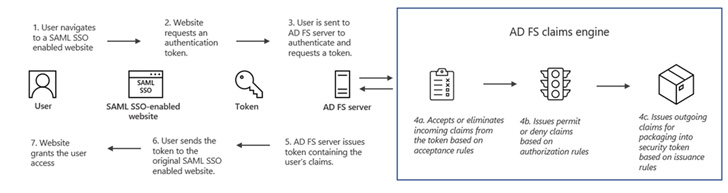
Directory Federation Services (AD FS[5]) servers, MagicWeb is a
rogue DLL (a backdoored version of
“Microsoft.IdentityServer.Diagnostics.dll”) that facilitates covert
access to an AD FS system through an authentication bypass.
“Nobelium’s ability to deploy MagicWeb hinged on having access
to highly privileged credentials that had administrative access to
the AD FS servers, giving them the ability to perform whatever
malicious activities they wanted to on the systems they had access
to,” Microsoft said.
The findings come on the heels of the disclosure of an APT29-led
campaign aimed at NATO-affiliated organizations with the goal of
accessing foreign policy information.
Specifically, this entails disabling an enterprise logging
feature called Purview Audit[6]
(previously Advanced Audit) to harvest emails from Microsoft 365
accounts.”APT29 continues to demonstrate exceptional operational
security and evasion tactics,” Mandiant said[7].
Another newer tactic used by the actor in recent operations is
the use of a password guessing attack to obtain the credentials
associated with a dormant account and enroll it for multi-factor
authentication, granting it access to the organization’s VPN
infrastructure.
APT29 remains a prolific threat group just as it’s skillful.
Last month, Palo Alto Networks Unit 42 flagged a phishing campaign[8]
that takes advantage of Dropbox and Google Drive cloud storage
services for malware deployment and other post-compromise
actions.
References
Read more https://thehackernews.com/2022/08/microsoft-uncovers-new-post-compromise.html