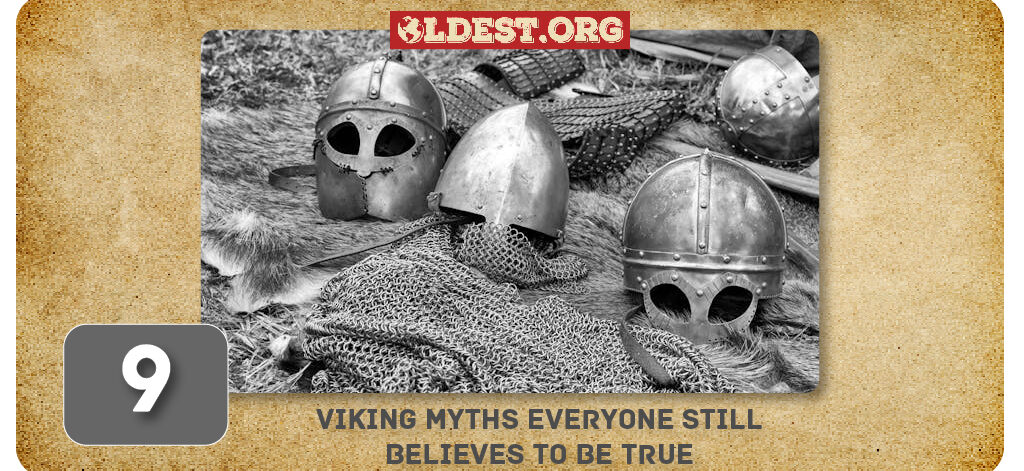
If you’ve spent any time around pop culture, you already “know” a few things about Vikings. They wore horned helmets. They were basically medieval bodybuilders. They roamed around burning villages because it was Tuesday.
And apparently every Viking was named Ragnar. Except… almost none of this is true. The real Norse world was layered, clever and surprisingly complex. Vikings were traders, shipbuilders, storytellers, mathematicians, farmers, explorers and yes, sometimes raiders.
So, let’s peel back the fiction. Below are nine Viking myths that still shape how people imagine the Norse world today, even though historians have been debunking them for years.
1. Vikings Wore Horned Helmets
Source: Canva
This is probably the biggest myth surrounding Vikings. If costume shops had their way, you’d think every Viking marched into battle looking like a particularly aggressive bull. But horned helmets? Zero historical evidence. Actual Viking helmets that have been found are practical, simple and made for survival. They were usually rounded or conical, designed to deflect blows, not to intimidate enemies with antler fashion choices. So where did the horns come from? You can thank 19th-century artists and costume designers, especially during the era when Wagner’s operas were taking over Europe.
2. Vikings Were Giant, Savage Brutes
Source: Canva
Did Vikings fight? Absolutely. Were they oversized monsters who lived only to pillage? Not even close. Real Viking populations were made up of farmers, fishers, craftspeople and traders long before they were raiders. Most men were around 5’7″ to 5’9″, which was tall for the era but nowhere near the hulking giants TV loves to portray. The “savage brute” stereotype also ignores how sophisticated Norse culture was. They had complex legal systems, held assemblies called “things,” kept beautifully detailed genealogies, and crafted poetry that could emotionally devastate a hero in under 30 lines.
3. Vikings Were Dirty and Unhygienic
Source: Canva
People assume medieval equals filthy, and Vikings get dragged into that image. But the Norse were surprisingly clean compared to many of their European neighbors. Archaeologists have uncovered personal grooming kits with tweezers, razors, combs and ear cleaners. Yep, ear cleaners. The Vikings were serious about hygiene. They bathed weekly (a lot, for the era), washed regularly, and even dyed their hair, especially the men, who often used lye to lighten it. Were they spa-level clean? No. But for people who spent long weeks at sea, they worked hard to stay presentable. The image of stinking barbarians was mostly propaganda.
4. Vikings Only Raided and Plundered
Source: Canva
Raiding is the headline. But trading was the full story. The Viking world was connected by huge trade networks stretching from North America to the Middle East. They bought and sold everything from spices and silk to furs, amber and weapons. Norse merchants set up shop in major trade cities, some of which they founded themselves. On top of that, Viking society depended heavily on farming. Their communities raised cattle, sheep, goats and crops like barley and rye. The truth is this: the Norse economy needed trade and agriculture. Raiding was opportunistic. Trading built civilizations.
If Viking culture fascinates you, you might also enjoy our breakdown of traditional Norse names.
5. Vikings Had Tattoos Just Like in TV Shows
Source: Canva
This one hurts because the idea is so compelling. The intricate knotwork, the runes, the swirling patterns across faces and arms, it looks incredible on screen. But the evidence is thin. There is one written account: an Arab traveler named Ahmad ibn Fadlan described some Norse people (likely Rus Vikings) as being “covered from fingernail to neck with dark green figures.” But historians debate whether it referred to tattoos or painted body decoration. There are no preserved Viking bodies that clearly show tattoos, so there’s no way to confirm what’s true and what’s myth.
6. Vikings Were a Unified Empire Led by One King
Photo by Gioele Fazzeri on Unsplash
Modern stories love a single Viking leader. Ragnar. Ivar. Bjorn. Pick your favorite hero. But in reality, there was no unified Viking nation. The Norse world was a patchwork of small kingdoms and clan territories. Leaders varied region to region. Norway, Sweden and Denmark had separate rulers and often fought each other. A Viking from Norway may not have had much in common with one from Denmark beyond language, ships and a general appreciation for good ale. Even their beliefs and traditions varied. Some areas worshiped certain gods more intensely than others. Some had different laws.
7. Vikings Lived Short, Brutal Lives
Source: Reddit
The idea that everyone in the 10th century died at 35 has been repeated so often that people accept it without question. But that number is misleading. The average was dragged way down by high infant mortality. If you survived childhood, you had a decent shot at living into your 50s or 60s. Many archaeological finds show signs of healed injuries, long-term illnesses and evidence of people living long enough to develop arthritis, the kind that you earn only after decades of life. Yes, life was harder than it is today. Medical care wasn’t great, winter was brutal and war was always a possibility. But the idea that Vikings routinely died young is exaggerated.
8. Vikings Believed the World Was Flat
Source: Canva
Despite the memes, Vikings did not think they would fall off the edge of the world. Norse cosmology was imaginative, yes, but it didn’t confuse mythology with geography. Vikings sailed vast distances with confidence. They reached Greenland and likely parts of North America centuries before Columbus. They understood that the world’s shape curved, even if they didn’t have a scientific model to explain it. Their navigational tools, sunstones and long-distance sea routes all point to a culture that was deeply familiar with the nature of the Earth.
9. Vikings Constantly Drank from Skulls and Worshiped Death
Source: Canva
This myth is dramatic, but it’s also one of the most absurd. The claim that Vikings drank from enemies’ skulls came from a mistranslation in the 17th century. The original Old Norse phrase referred to drinking horns made from animals and not human craniums. As for being obsessed with death, the Vikings were actually attached to life. Their sagas are full of humor, love stories, rivalries, farm life, family drama and everyday concerns. Their religion wasn’t death-worship. Sure, they believed in Valhalla, but that was only one of several afterlife destinations. Many hoped for peaceful rest, not an eternity of battle.
For more unbelievable discoveries, check out our list of the rarest treasures found completely by accident.
Final Words
The truth about Vikings is far more interesting. Vikings were explorers who reached continents nobody thought possible. They balanced brutal raids with thriving trade networks. They valued poetry as much as physical strength. Peeling away the myths doesn’t shrink them. It makes them more human, more relatable and more impressive.
The post 9 Viking Myths Everyone Still Believes to Be True appeared first on Oldest.org.