

Heart attacks often leave scarred muscle tissue in their wake,
getting in the way of the electrical activity that is needed for a
healthy heart to function properly.
While drug treatments can prevent any more damage they can’t
help the tissue regenerate. Researches at Trinity College Dublin
are developing electrically conductive materials to repair scarred
heart tissue by using artificial materials.
RELATED: NEW BIOMARKER ‘FINGERPRINT’
WITH AI TECHNOLOGY CAN NOW PREDICT FUTURE HEART
ATTACKS [1]
Published in journal APL
Bioengineering[2], the researchers looked
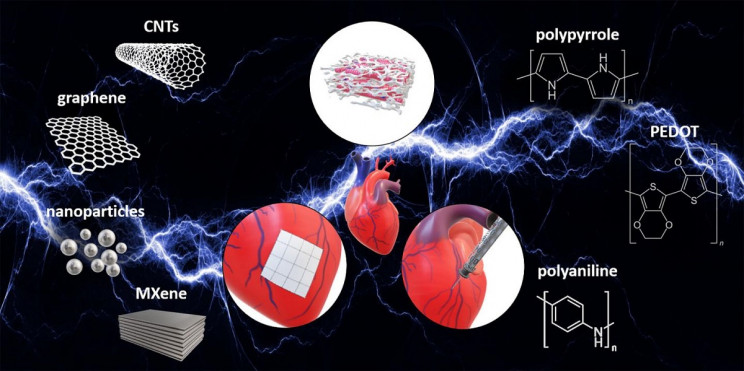
at using electrically conductive biomaterials for heart repair[3], focusing in on three
methods. Those included creating scaffolds that heart cells can
regenerate in, developing electrically conductive patches to repair
the damaged tissue and producing injectable hydrogels to carry
drugs to the specific areas where the damage is.
 Michael Monaghan, Trinity College
Dublin[4]
Researchers look at ways to prevent scars from blocking
signals to the heart
To overcome the issue of a scar acting as an electrical
insulator that could stop the heart from receiving the electrical
signal that enables the heart to contract, researchers are
developing electrical conductive materials that match the
electrical properties of the cells in the myocardium that enable
the heart to beat[5]. In a healthy heart, the
beats occur when cells in the myocardium contract, which happens in
a twisting fashion. The contractions are caused by an electrical
signal from cells called the sinoatrial node. If there is scar
tissue, the signal isn’t received by the myocardium.
The researchers used small tubes and/or sheets or carbon,
metallic nanoparticles, metal carbides, and plastics covered in a
special substant to enable them to conduct electricity.
The long-term impact still needs to be
studied
While more work has to be done, particularly looking at the
long-term impact of having these materials in the heart, some of
the substances proved to have benefits. Certain metal carbides
could be anti-inflammatory, the researchers found. Michale
Monaghan, Ussher Assistant Professor in the Mechanical and
Manufacturing Engineering department at Trinity College Dublin and
co-author of the story said in a press release[6]
PEDOT, a polymer, may be the most suitable for electrically
conductive grafts and scaffolds largely because it can be made into
3D structures without needing different supporting
materials.
References
- ^
RELATED:
NEW BIOMARKER ‘FINGERPRINT’ WITH AI TECHNOLOGY CAN NOW PREDICT
FUTURE HEART ATTACKS
(interestingengineering.com) - ^
APL Bioengineering
(aip.scitation.org) - ^
heart
repair (interestingengineering.com) - ^
Michael Monaghan, Trinity College
Dublin (www.eurekalert.org) - ^
heart to
beat (interestingengineering.com) - ^
press release
(www.eurekalert.org)