The Intergovernmental Panel
on Climate Change (IPCC)[1]
has stated that global warming is unequivocal, that human influence
on the climate system is evident, and that greenhouse gases are the
highest they have ever been in history.
The IPCC also
notes[2] that many of the changes
observed have been unprecedented in recent decades to millennia.
The atmosphere and the ocean have warmed, the snow and ice volumes
have decreased, and the sea level has risen.
RELATED: 10 WAYS YOU CAN HELP REDUCE THE
CLIMATE CHANGE[3]
The human influence is evident in light of the increasing
concentrations of greenhouse gases in the atmosphere, positive
radiative forcing, and the observed warming.
1. What are the causes of climate change?
The causes of climate change can be divided into those related
to natural processes and those that are linked to human activity.
Naturally, there have been radical changes in the planetary climate
due to changes in rotation, orbit and the inclination of the Earth,
or extraordinary natural events such as volcanic eruptions.
The clearest example of this modification of the
climate[4] is the glaciations, and
they are produced by the change in the shape of the Earth’s orbit
and the inclination of the planet to its axis. Now, we are in an
interglacial period (between two glaciations), and this stability
of the climate has allowed the development and growth of human
civilization.
The greenhouse effect is a process that occurs naturally in the
Earth’s atmosphere and results from the interaction between the
energy that comes from the sun and some of the gases in the
atmosphere called greenhouse gases. The natural greenhouse effect
allows life to exist as we know it on the planet because,
without it, the average temperature of the Earth would be below
-18 °C.[5]
The atmosphere is mainly composed of Nitrogen and Oxygen and
only 1% by other components, including greenhouse
gases. Most greenhouse gases have always existed in the atmosphere,
and their cycle starts with natural processes such as:
- Water Vapor: The evaporation of water produces
water vapor as it is an essential part of the hydrological
cycle. - Carbon Dioxide: Carbon dioxide is generated
from the respiration of living beings, the decomposition of plants
and animals, and natural fires, being part of the carbon
cycle. - Methane: Wetlands and ruminants mainly emit
methane during their digestive process as it is the result of the
anaerobic decomposition of organic matter. - Nitrous Oxide: Nitrous oxide is a product of
the bacterial breakdown of organic matter. - Ozone: Ozone is the union of three oxygen
atoms.
Unfortunately, there is another source of change in the global
climate. This change is associated with human activities.
From the so-called Industrial Revolution to the present day,
industrial processes are developed by burning fossil
fuels[6] (oil, gas, and its
derivatives, such as gasoline) and by taking advantage of natural
resources.
These activities are changing the composition of the Earth’s
atmosphere, emitting more greenhouse gases and compounds that can
remain in the atmosphere for up to 50 years. Although more than
half of the CO2 emitted today takes a century to be
removed[7] from the atmosphere, a
part of the CO2 emitted (about 20%) remains in the
atmosphere for many millennia.
In the last 800,000 years, atmospheric
concentrations of carbon dioxide, methane, and nitrous oxide have
increased to unprecedented levels. Moreover, the oceans have
absorbed around 30% of
the total[8] emitted anthropogenic
carbon dioxide, which has led to their acidification.
2. How does climate change affect us?
The effects of climate change are many, very diverse and, for
the most part, very serious. The signs of the changes we are
suffering are already evident, and we can see them in some
situations such as:
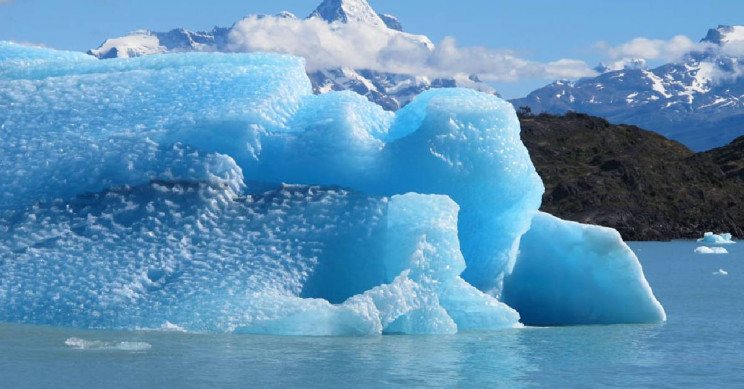
The polar caps are melting. The sea surface covered by Arctic
ice on the North Pole has decreased by
10%[9]
in recent decades, and the thickness of ice above water by almost
40%. Meanwhile, on the world’s other side, the ice
sheet that currently covers the Antarctic continent has become
largely unstable.
The glaciers are retreating. 75% of the
glaciers in the Swiss Alps will likely disappear by
2050[10]. Those responsible for
the ski resort of Andermatt (Switzerland) study the possibility of
covering the Gurschen glacier during the summer, a popular area for
skiers, with a gigantic sheet of insulating plastic to get it to
stop melting and moving.
When the ice caps and glaciers
melt[11], the sea level
increases. In the last century, this level has already increased by
10-25 cm (depending on the measure), and it is
feared that the increase may reach 88 cm by
2100.
If so, the islands and coastal areas will be flooded, such as
the Maldives, the Nile Delta in Egypt and Bangladesh.
Furthermore, tropical diseases, such as malaria, could spread in
areas where climatic conditions are suitable for the life of the
mosquito that transmits it. A temperature rise of
2°C could potentially endanger more than
210 million people[12].
3. What are the effects of global
warming?
Like climate change, global warming is a reality that is causing
alterations and imbalances in all countries of the world. The
problem of global warming is the product of the irresponsible and
unsustainable actions of humanity with the environment and natural
resources.
Given this important
environmental science issue[13], it is essential to
know all its effects and consequences to assume mitigation
measures.
Global warming mainly impacts the following aspects:
- Climate changes in different parts of the world
- Depletion of natural resources
- Precipitation reduction
- Ocean acidification
- Rising sea levels
- Melting glaciers, snow and the poles
- No ocean circulation
- Expansion of diseases such as dengue, malaria, cancer,
respiratory, cardiac diseases, others - Health effects in children and the elderly
- Deterioration of the physical and mental health of the entire
world population - Desertification
- Erosion
- Reduction of solar radiation flow
- Extinction of plant and animal species
- Increase in the range of disease vectors and pathogens
- Increase in poverty and hunger
- A decrease in the economic and social development of
nations - Reduction of the thermohaline circulation
- Reduction of the ozone layer
All these effects and impacts of global warming are caused by
greenhouse gas emissions, environmental pollution, and each of the
ecological disasters that human beings exert on the environment
without any awareness.
4. What are the main causes of global
warming?
Increase in greenhouse gases
The excessive industrial activity that has been registered in
the world since the Industrial Revolution is the main cause of global
warming[14]. The vast majority of
processes of this type release a huge amount of greenhouse gases
that, once in the atmosphere, deteriorate the ozone layer and, at
the same time, expose the Earth directly to the sun’s rays.
Burning fossil fuels
A good part of greenhouse gases is generated from the burning of
fossil fuels. This is observed, for example, in large urban centers
with the massive burning of fuels by cars and other means of heavy
transport.
The negative effect of fossil fuels is twofold if we take into
account air pollution and health problems that may arise from this
circumstance. For example, the World Health
Organization estimates[15] that there are
currently about 300 million people in the world
who have asthma, a figure that will increase proportionally to the
presence of harmful substances in the environment.
Deforestation of forests
It is often thought that the deforestation of forests only
generates effects in the closest environments. However, the damage
that is generated is global.
Trees have the power to convert CO2 into oxygen through the
process of photosynthesis, thereby contributing to reducing air
pollution. But if we reduce their number, the concentration of CO2
and other gases will be higher and, therefore, the terrestrial
temperatures will increase.
Forests and jungles still cover about
30% of the Earth’s surface[16], but each year, an
extension similar to that of countries like Panama is lost. Do we
need to say more?
Excessive use of fertilizers
Pesticides, fertilizers, and other chemicals used in sectors
such as agriculture and livestock are another direct cause of
global warming. All have a high content of nitrogen oxide, which is
even more harmful than carbon dioxide.
High production of waste
The high production of waste also favors global warming.
How?
The more waste we produce daily, the higher the levels of
methane gas in the environment. Methane is an element that is
generated during the decomposition of materials in landfills.
In addition to that, consuming in bulk means a greater demand,
which will increase industries’ production levels and, therefore,
the levels of greenhouse gases released into the atmosphere will be
higher.
Food for thought
There is a lot of talk in the present times about carbon offset,
carbon emissions, and climate change. Greta Thunberg’s emotional
speech[17] at the UN about climate
change, criticizing world leaders, is testimony enough of how
negligent we are about worrisome environmental issues in the
present times.
It also sheds light on how governments throughout the world
would rather handle political scenarios than the dangerous levels
of global warming.
RELATED: STUDY FINDS CLIMATE CHANGE COULD
CAUSE A CIVILIZATION COLLAPSE BY 2050[18]
Therefore, now more than ever, there is a massive need for world
leaders to heed the advice of disappointed environmentalists and
informed scientists. This climate breakdown will continue
escalating unless we take proper steps to mitigate the damage and
reverse the destruction that has already been made to the
environment.
In the words of Thunberg, “The message is that we have had
enough.”
References
- ^
Intergovernmental Panel on Climate
Change (IPCC) (www.ipcc.ch) - ^
IPCC also notes
(www.rte.ie) - ^
RELATED:
10 WAYS YOU CAN HELP REDUCE THE CLIMATE CHANGE
(interestingengineering.com) - ^
modification of the climate
(climate.nasa.gov) - ^
planet
(www.nationalgeographic.org) - ^
burning fossil fuels
(interestingengineering.com) - ^
takes a century to be removed
(www.princeton.edu) - ^
30% of the total
(home.nps.gov) - ^
decreased by 10%
(elibrary.cenn.org) - ^
disappear by 2050
(www.theguardian.com) - ^
ice caps and glaciers melt
(climate.nasa.gov) - ^
endanger more than 210 million
people (eur-lex.europa.eu) - ^
important environmental science
issue (www.sciencenewsforstudents.org) - ^
main cause of global warming
(www.nationalgeographic.com) - ^
World Health Organization
estimates (www.who.int) - ^
about 30% of the Earth’s surface
(data.worldbank.org) - ^
Greta
Thunberg’s emotional speech
(interestingengineering.com) - ^
RELATED: STUDY FINDS CLIMATE CHANGE
COULD CAUSE A CIVILIZATION COLLAPSE BY 2050
(interestingengineering.com)