

Renewables overtook fossil fuels as a source for energy for
businesses and homes in the UK, for the first time over the last
quarter.
The record was set in the third quarter of this year after
renewable energy sources rose to provide 40% of
energy.
An analysis by climate website Carbon Brief[1] showed that
renewable energy sources, such as wind turbines, renewable biomass
plants, and solar farms, generated 29.5 terawatt-hours
(TWh) from July to September — more than the 29.1
TWh generated by fossil fuels.
RELATED: TOP 5 ENERGY COMPANIES THAT
ARE CHANGING THE FACE OF RENEWABLE ENERGY IN
2019[2]
Dwindling coal
As The Guardian reports,
this new milestone in renewable energy production confirms
predictions made by National Grid[4]. The predictions claimed
that 2019 would be the first year
since the Industrial Revolution that
zero-carbon electricity – renewables and nuclear – will provide
more power than coal-fired power and gas.[3]
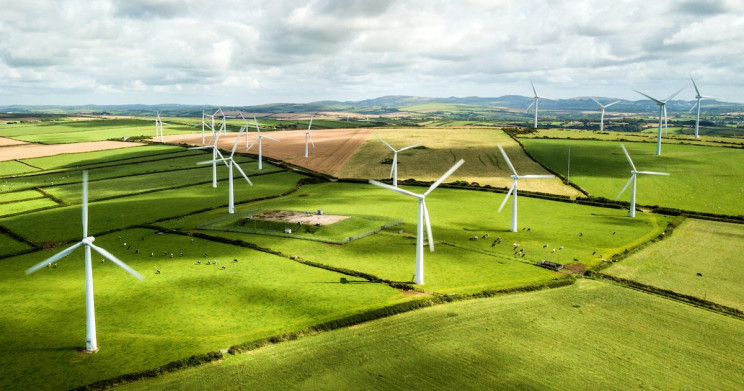
Wind turbines in Cornwall. Source: LeoPatrizi/iStock[5] A 2025 ban on coal
means that British coal plants are shutting down. Only four will
remain in the UK, located in Nottinghamshire, Northern Ireland, and
Yorkshire.
The
strength of wind power
Wind power, which makes up 20% of the UK’s
electricity, is the strongest source of renewable energy in the
UK. Electricity generated from renewable biomass plants made
up 12% of energy, while solar panels generated
6%.
The Hornsea One project, the world’s largest offshore wind
farm, started generating electricity off the
Yorkshire coast in February of this year.
By October, it had already reached peak capacity of
1,200MW.
The Beatrice wind farm, another large windfarm project, was also
built off the north-east coast of Scotland[6]
this summer.
As the Guardian writes, Kwasi Kwarteng, the
minister for energy and clean growth, stated the renewables record
is “yet another milestone on our path towards ending our
contribution to climate change altogether by 2050.”
“Already, we’ve cut emissions by 40% while growing the economy
by two thirds since 1990. Now, with more offshore wind projects on
the way at record low prices, we plan to go even further and faster
in the years to come,” Kwarteng explained.
References
- ^
Carbon Brief
(www.carbonbrief.org) - ^
RELATED:
TOP 5 ENERGY COMPANIES THAT ARE CHANGING THE FACE OF RENEWABLE
ENERGY IN 2019 (interestingengineering.com) - ^
The Guardian
(www.theguardian.com) - ^
predictions made by National Grid
(www.bbc.com) - ^
LeoPatrizi/iStock
(www.istockphoto.com) - ^
Scotland
(interestingengineering.com)