A new cross-platform backdoor[1]
called “SysJoker” has been observed targeting
machines running Windows, Linux, and macOS operating systems as
part of an ongoing espionage campaign that’s believed to have been
initiated during the second half of 2021.
“SysJoker masquerades as a system update and generates its
[command-and-control server] by decoding a string retrieved from a
text file hosted on Google Drive,” Intezer researchers Avigayil
Mechtinger, Ryan Robinson, and Nicole Fishbein noted[2]
in a technical write-up publicizing their findings. “Based on
victimology and malware’s behavior, we assess that SysJoker is
after specific targets.”
The Israeli cybersecurity company, attributing the work to an
advanced threat actor, said it first discovered evidence of the
implant in December 2021 during an active attack against a
Linux-based web server belonging to an unnamed educational
institution.
A C++-based malware, SysJoker is delivered via a dropper file
from a remote server that, upon execution, is engineered to gather
information about the compromised host, such as MAC address, user
name, physical media serial number, and IP address, all of which
are encoded and transmitted back to the server.
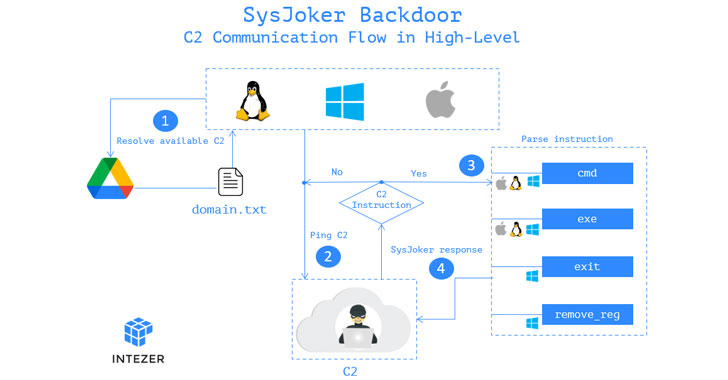
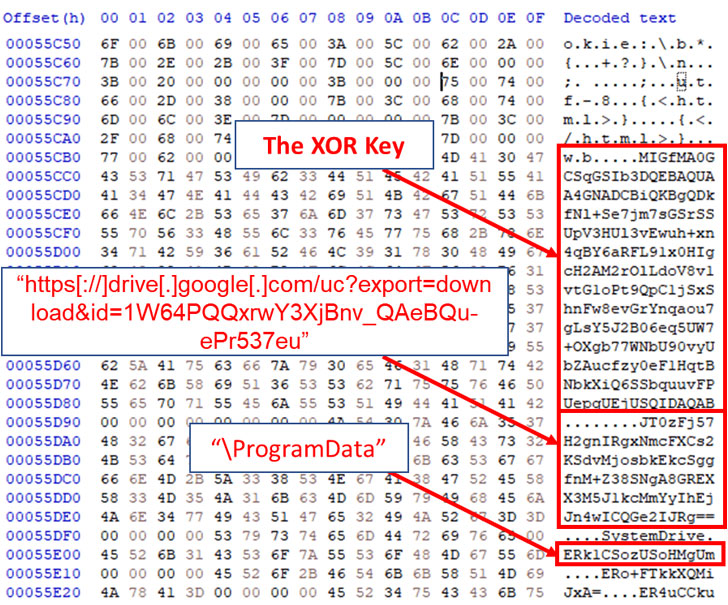
What’s more, connections to the attacker-controlled server are
established by extracting the domain’s URL from a hard-coded Google
Drive link that hosts a text file (“domain.txt”), enabling the
server to relay instructions to the machine that allow the malware
to run arbitrary commands and executables, following which the
results are beamed back.
“The fact that the code was written from scratch and hasn’t been
seen before in other attacks [and] we haven’t witnessed a second
stage or command sent from the attacker […] suggests that the
attack is specific which usually fits for an advanced actor,” the
researchers said.
References
- ^
cross-platform backdoor
(thehackernews.com) - ^
noted
(www.intezer.com)
Read more https://thehackernews.com/2022/01/new-sysjoker-espionage-malware.html