Dec 08, 2022Ravie Lakshmanan
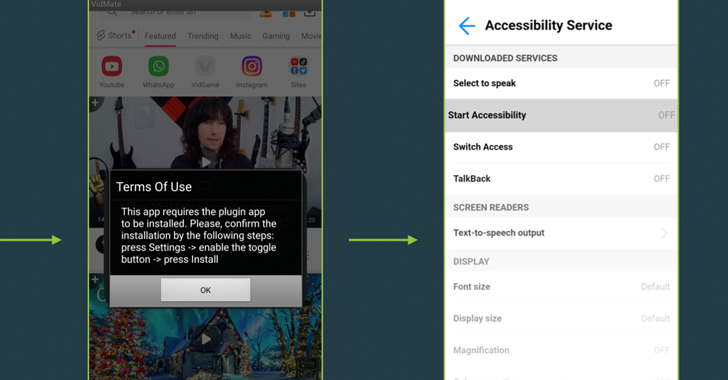
Researchers have shed light on a new hybrid malware campaign
targeting both Android and Windows operating systems in a bid to
expand its pool of victims.
The attacks entail the use of different malware such as ERMAC[1], Erbium[2], Aurora[3], and Laplas[4], according to a ThreatFabric report[5]
shared with The Hacker News.
“This campaign resulted in thousands of victims,” the Dutch
cybersecurity company said, adding, “Erbium stealer successfully
exfiltrated data from more then 1,300 victims.”
The ERMAC infections commence with a fraudulent website that
claims to offer Wi-Fi authorization software for Android and
Windows that, when installed, comes with features to steal seed
phrases from crypto wallets and other sensitive data.
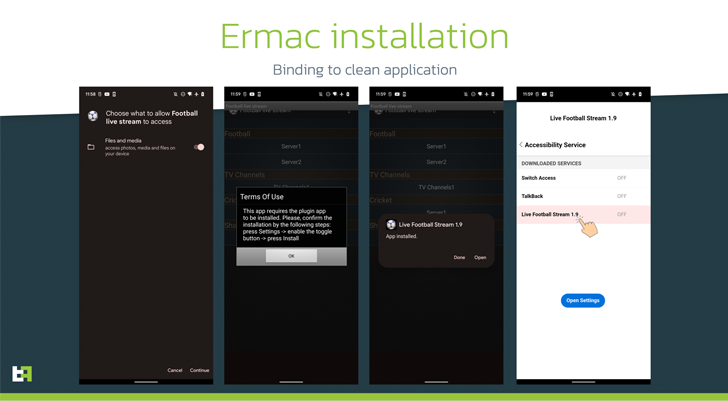
ThreatFabric said it also found a number of malicious apps that
were trojanized versions of legitimate apps like Instagram, with
the operators using them as droppers to deliver the obfuscated
malicious payload.
The rogue apps, dubbed Zombinder, are said to have been
developed using an APK binding service advertised on the dark web
by a well-known threat actor since March 2022.
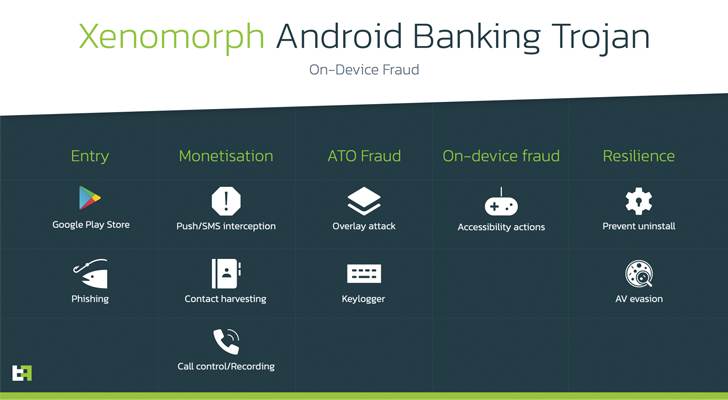
Such zombie apps have been used to distribute Android banking
trojans like SOVA[6]
and Xenomorph[7]
targeting customers in Spain, Portugal, and Canada, among
others.
Interestingly, the download option for Windows on the
booby-trapped website distributing ERMAC is designed to deploy the
Erbium and Aurora information stealers on the compromised
system.
Erbium[8], which is a
malware-as-a-service (MaaS) licensed for $1,000 per year, not only
steals passwords and credit card information, but has also been
observed acting as a conduit to drop the Laplas clipper that’s used
to hijack crypto transactions.
“The presence of such a wide variety of trojans might also
indicate that the malicious landing page is used by multiple actors
and provided to them as a part of a third-party distribution
service,” the researchers theorized.
Found this article interesting? Follow us on Twitter [9]
and LinkedIn[10] to read more exclusive
content we post.
References
- ^
ERMAC
(thehackernews.com) - ^
Erbium
(blog.cluster25.duskrise.com) - ^
Aurora
(thehackernews.com) - ^
Laplas
(thehackernews.com) - ^
ThreatFabric report
(www.threatfabric.com) - ^
SOVA
(thehackernews.com) - ^
Xenomorph
(thehackernews.com) - ^
Erbium
(www.cyfirma.com) - ^
Twitter
(twitter.com) - ^
LinkedIn
(www.linkedin.com)
Read more https://thehackernews.com/2022/12/researchers-uncover-darknet-service.html