
Mar 14, 2023Ravie Lakshmanan
An open source adversary-in-the-middle (AiTM[1]) phishing kit has found
a number of takers in the cybercrime world for its ability to
orchestrate attacks at scale.
Microsoft Threat Intelligence is tracking the threat actor
behind the development of the kit under its emerging moniker
DEV-1101.
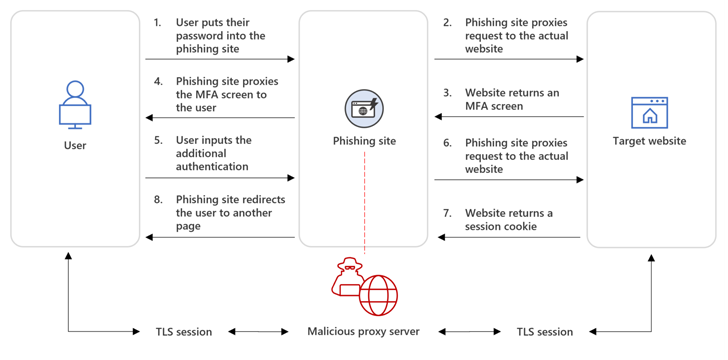
An AiTM phishing attack[2]
typically involves a threat actor attempting to steal and intercept
a target’s password and session cookies by deploying a proxy server
between the user and the website.
Such attacks are more effective owing to their ability to
circumvent multi-factor authentication (MFA) protections.
DEV-1101, per the tech giant, is said to be the party behind
several phishing kits that can be purchased or rented by other
criminal actors, thereby reducing the effort and resources required
to launch a phishing campaign.
“The availability of such phishing kits for purchase by
attackers is part of the industrialization of the cybercriminal
economy and lowers the barrier of entry for cybercrime,” Microsoft
said[3]
in a technical report.
The service-based economy that fuels such offerings can also
result in double theft, wherein the stolen credentials are sent to
both the phishing-as-a-service provider as well as their
customers.
The open source kit from DEV-1101 comes with features that make
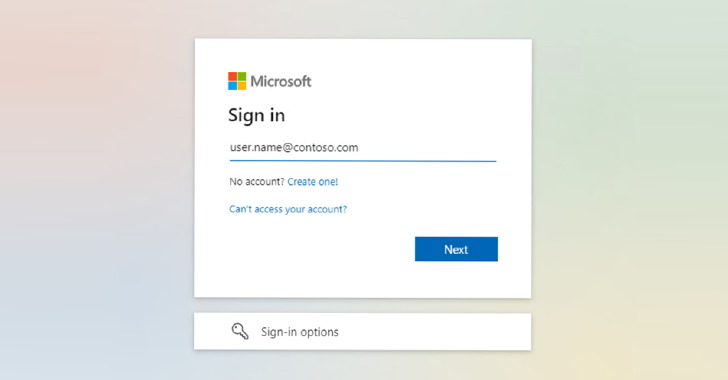
it possible to set up phishing landing pages mimicking Microsoft
Office and Outlook, not to mention manage campaigns from mobile
devices and even use CAPTCHA checks to evade detection.
The service, since its debut in May 2022, has undergone several
enhancements, chief among them being the ability to manage servers
running the kit through a Telegram bot. It currently has a price
tag of $300 for a monthly licensing fee, with VIP licenses costing
$1,000.
Microsoft said it has detected numerous high-volume phishing
campaigns spanning millions of phishing emails per day from various
actors that leverage the tool.
This includes an activity cluster dubbed DEV-0928 that Redmond
described as one of “DEV-1101’s more prominent patrons” and which
has been linked to a phishing campaign comprising over one million
emails since September 2022.
WEBINAR
Discover the Hidden Dangers of Third-Party SaaS Apps
Are you aware of the risks associated with third-party app
access to your company’s SaaS apps? Join our webinar to learn about
the types of permissions being granted and how to minimize
risk.
The attack sequence commences with document-themed email
messages containing a link to a PDF document, that when clicked,
directs the recipient to a login page that masquerades as
Microsoft’s sign-in portal, but not before urging the victim to
complete a CAPTCHA step.
“Inserting a CAPTCHA page into the phishing sequence could make
it more difficult for automated systems to reach the final phishing
page, while a human could easily click through to the next page,”
Microsoft said.
Although these AiTM attacks are designed to bypass MFA, it’s
crucial that organizations adopt phishing-resistant authentication
methods, such as using FIDO2 security keys, to block suspicious
login attempts.
Found this article interesting? Follow us on Twitter [5]
and LinkedIn[6]
to read more exclusive content we post.
References
Read more https://thehackernews.com/2023/03/microsoft-warns-of-large-scale-use-of.html