A large-scale unauthenticated scraping of publicly available and
non-secured endpoints from older versions of Prometheus event
monitoring and alerting solution could be leveraged to
inadvertently leak sensitive information, according to the latest
research.
“Due to the fact that authentication and encryption support is
relatively new, many organizations that use Prometheus haven’t yet
enabled these features and thus many Prometheus endpoints are
completely exposed to the Internet (e.g. endpoints that run earlier
versions), leaking metric and label dat,” JFrog researchers Andrey
Polkovnychenko and Shachar Menashe said[1]
in a report.
Prometheus[2]
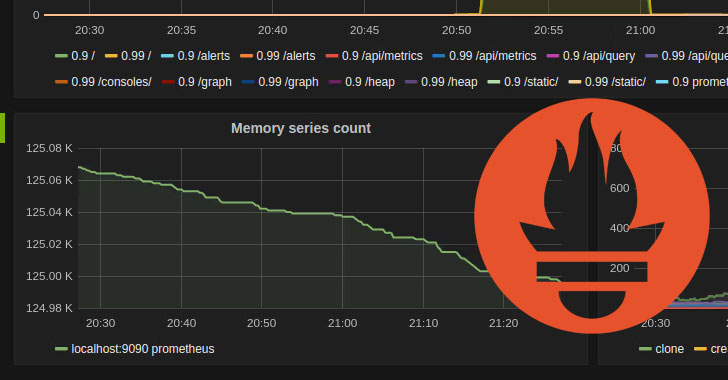
is an open-source system monitoring and alerting toolkit used to
collect and process metrics from different endpoints, alongside
enabling easy observation of software metrics such as memory usage,
network usage, and software-specific defined metrics, such as the
number of failed logins to a web application. Support for Transport
Layer Security (TLS) and basic authentication was introduced with
version 2.24.0[3]
released on January 6, 2021.
The findings come from a systematic sweep of publicly-exposed
Prometheus endpoints, which were accessible on the Internet without
requiring any authentication, with the metrics found exposing
software versions and host names, which the researchers said could
be weaponized by attackers to conduct reconnaissance of a target
environment before exploiting a particular server or for
post-exploitation techniques like lateral movement.
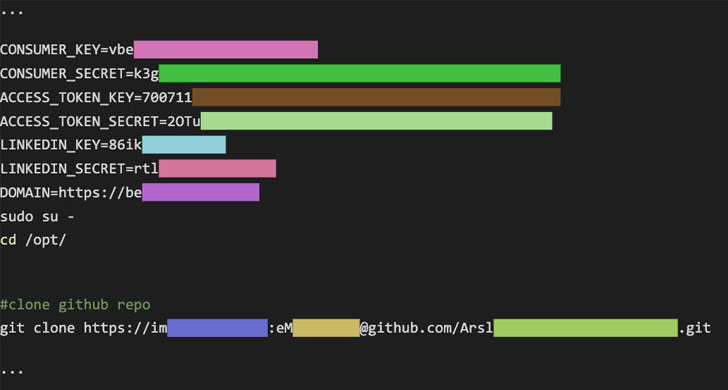
Some of the endpoints[4]
and the information disclosed are as follows –
- /api/v1/status/config – Leakage of usernames
and passwords provided in URL strings from the loaded YAML
configuration file - /api/v1/targets – Leakage of metadata labels,
including environment variables as well as user and machine names,
added to target machine addresses - /api/v1/status/flags – Leakage of usernames
when providing a full path to the YAML configuration file
Even more concerningly, an attacker can use the
“/api/v1/status/flags” endpoint to query the status of two
administration interfaces — “web.enable-admin-api[5]” and “web.enable-lifecycle[6]” — and if found manually
enabled, exploit them to delete all saved metrics and worse, shut
down the monitoring server. It’s worth noting the two endpoints are
disabled by default for security reasons as of Prometheus 2.0.
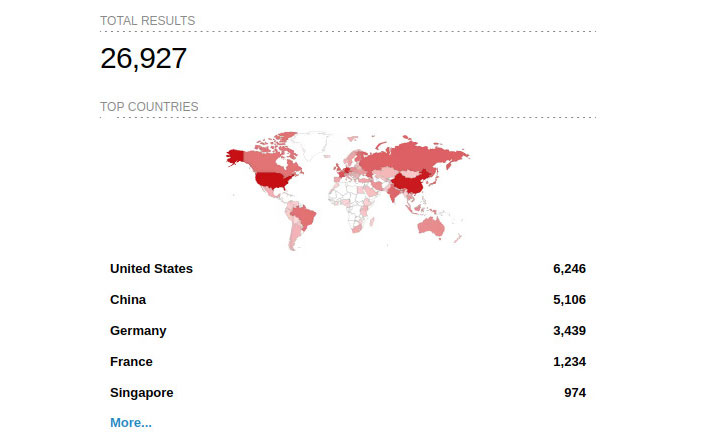
JFrog said it found about 15% of the Internet-facing Prometheus
endpoints had the API management setting enabled, and 4% had
database management turned on. A total of around 27,000 hosts have
been identified via a search on IoT search engine Shodan.
Besides recommending organizations to “query the endpoints […]
to help verify if sensitive data may have been exposed,” the
researchers noted that “advanced users requiring stronger
authentication or encryption than what’s provided by Prometheus,
can also set up a separate network entity to handle the security
layer.”
References
- ^
said
(jfrog.com) - ^
Prometheus
(prometheus.io) - ^
version
2.24.0 (github.com) - ^
endpoints
(prometheus.io) - ^
web.enable-admin-api
(prometheus.io) - ^
web.enable-lifecycle
(prometheus.io)