
Multiple security vulnerabilities have been disclosed in
softphone software from Linphone and MicroSIP that could be
exploited by an unauthenticated remote adversary to crash the
client and even extract sensitive information like password hashes
by simply making a malicious call.
The vulnerabilities, which were discovered by Moritz Abrell of
German pen-testing firm SySS GmbH, have since been addressed by the
respective manufacturers following responsible disclosure.
Softphones are essentially software-based phones that mimic desk
phones and allow for making telephone calls over the Internet
without the need for using dedicated hardware. At the core of the
issues are the SIP services offered by the clients to connect two
peers to facilitate telephony services in IP-based mobile
networks.
SIP aka Session Initiation Protocol is a signaling protocol[1]
that’s used to control interactive communication sessions, such as
voice, video, chat and instant messaging, as well as games and
virtual reality, between endpoints, in addition to defining rules
that govern the establishment and termination of each session.
A typical session in SIP commences with a user agent (aka
endpoint) sending an INVITE message to a peer through SIP proxies —
which are used to route requests — that, when accepted on the other
end by the recipient, results in the call initiator being notified,
followed by the actual data flow. SIP invitations carry session
parameters that allow participants to agree on a set of compatible
media types.
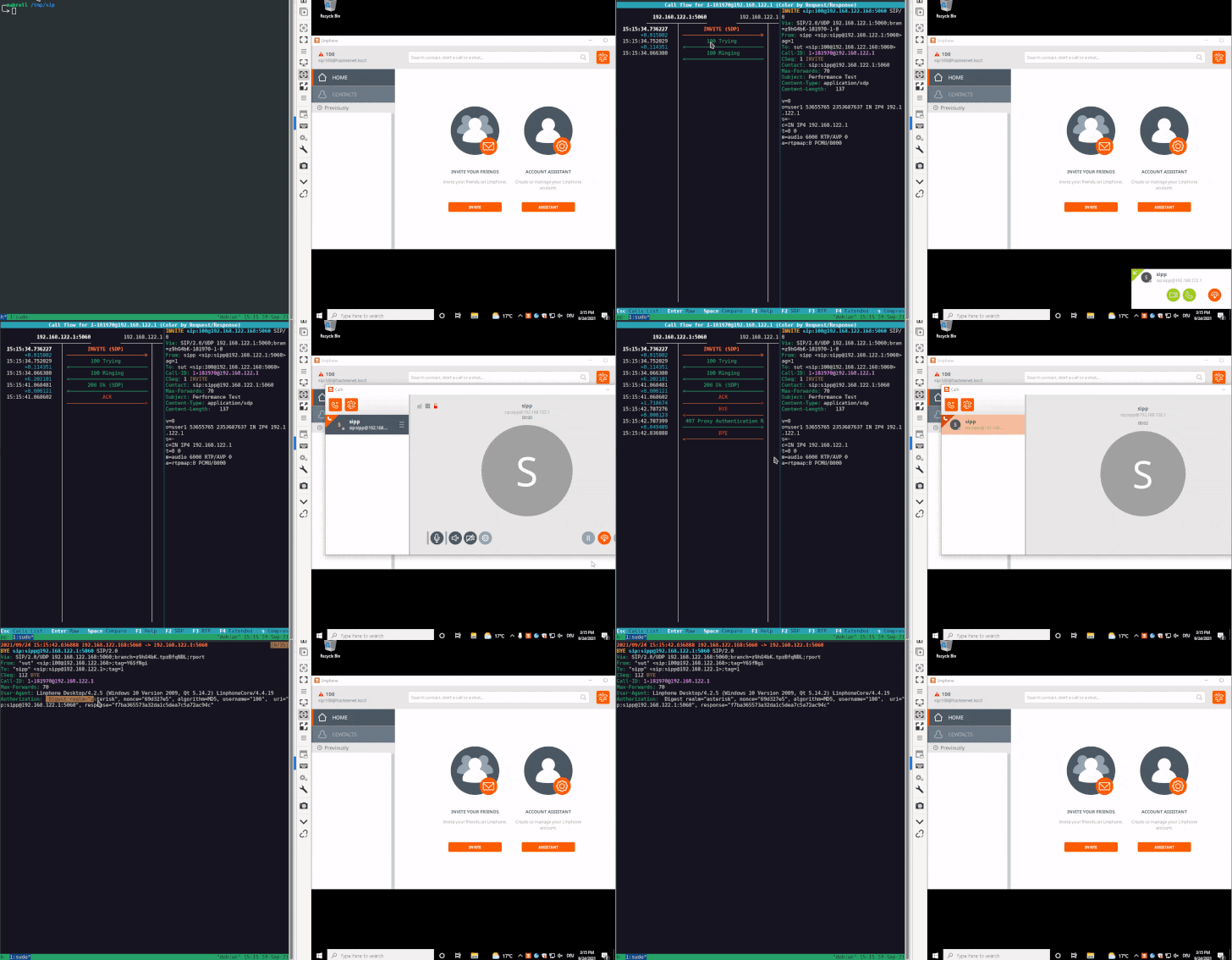
The attack devised by SySS is what’s called a SIP Digest Leak[2], which involves sending
a SIP INVITE message to the target softphone to negotiate a session
followed by sending a “407 proxy authentication required[3]” HTTP response status
code, indicating the inability to complete the request because of a
lack of valid authentication credentials, prompting the softphone
to respond back with the necessary authentication data.
“With this information, the attacker is able to perform an
offline password guessing attack, and, if the guessing attack is
successful, obtain the plaintext password of the targeted SIP
account,” Abrell explained[4]. “Therefore, this
vulnerability in combination with weak passwords is a significant
security issue.”
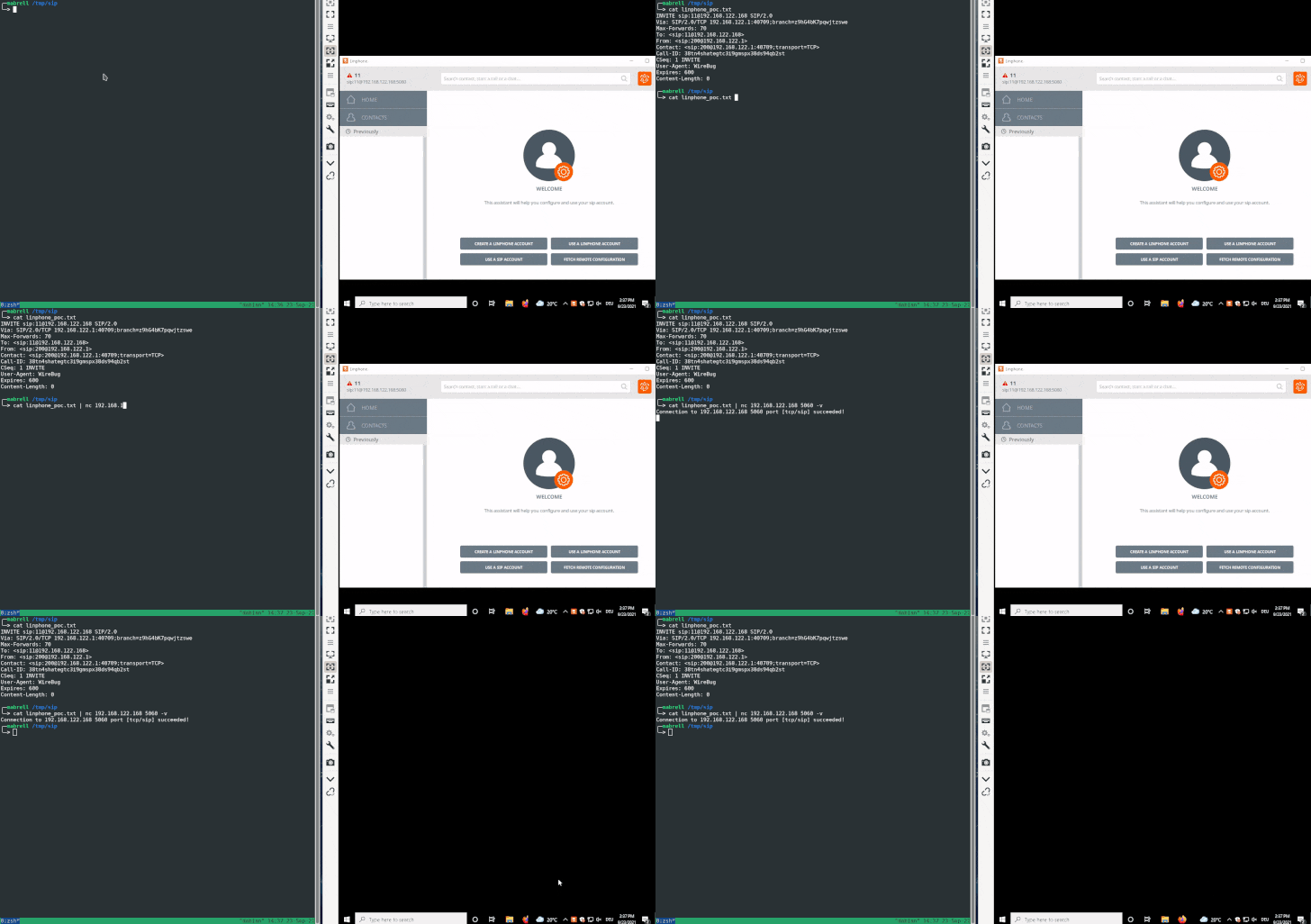
Also discovered is a NULL pointer dereference[5] vulnerability in the
Linphone SIP stack that could be triggered by an unauthenticated
remote attacker by sending a specially crafted SIP INVITE request
that could crash the softphone. “A missing tag parameter in the
From header causes a crash of the SIP stack of Linphone,” Abrell
said.
The disclosure is the second time a NULL pointer dereference
vulnerability has been discovered in the Linphone SIP client. In
September 2021, Claroty made public details of a zero-click flaw in
the protocol stack (CVE-2021-33056[6]) that could be remotely
exploited without any action from a victim to crash the SIP client
and cause a denial-of-service (DoS) condition.
“The security level of SIP stacks still needs improvement,”
Abrell said, calling the need for a defense-in-depth[7]
approach that entails “defining and implementing appropriate
security measures for the secure operation of unified communication
systems.”
References
- ^
signaling protocol
(en.wikipedia.org) - ^
SIP
Digest Leak (resources.enablesecurity.com) - ^
407
proxy authentication required
(developer.mozilla.org) - ^
explained
(blog.syss.com) - ^
NULL
pointer dereference (cwe.mitre.org) - ^
CVE-2021-33056
(thehackernews.com) - ^
defense-in-depth
(en.wikipedia.org)