Security teams typically have great visibility over most areas,
for example, the corporate network, endpoints, servers, and cloud
infrastructure. They use this visibility to enforce the necessary
security and compliance requirements. However, this is not the case
when it comes to sensitive data sitting in production or analytic
databases, data warehouses or data lakes.
Security teams have to rely on data teams to locate sensitive
data and enforce access controls and security policies. This is a
huge headache for both the security and data teams. It weakens the
business’s security and compliance putting it at risk of exposing
sensitive data, large fines, reputational damages, and more. Also,
in many cases, it slows down the business’s ability to scale up
data operations.
This article examines how Satori, a data security platform,
gives control of the sensitive data in databases, data warehouses
and data lakes to the security teams.
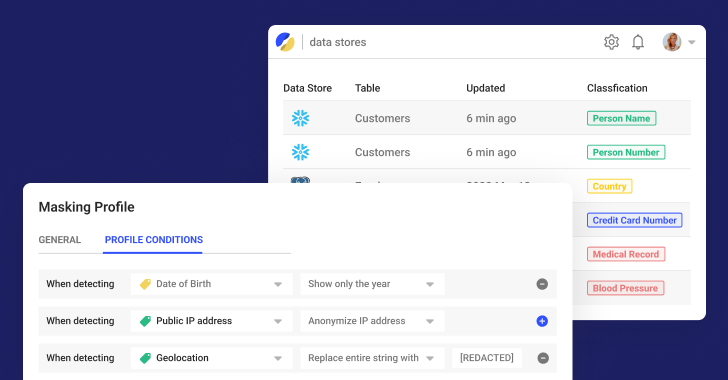
Satori’s automated data security
platform[1] provides a simple and
easy way to meet security and compliance requirements while
reducing risk exposure.
Why is Securing Data Stores Hard?
Security teams don’t have good visibility and enforcement of
policies regarding access to DBs, data warehouses or data lakes.
Take a look at an example.
Nick is a security engineering manager at ACME organization. He
is responsible for keeping up with changing security and compliance
regulations such as HIPAA, SOC2, and ISO. This is a difficult task
since security and compliance regulations are always changing and
evolving. Nick is good at his job and can wade through the
complexities of the different regulations and determine the
necessary security measures to ensure that ACME remains in
compliance. This is important so that ACME doesn’t fail an audit,
expose sensitive data, receive fines or worse.
Then, one day, Nick is suddenly tasked with meeting security and
compliance requirements across all of ACME’s analytic and
production data.
Nick faces a problem. Although he has done his job and
determined the necessary steps to ensure security and compliance it
is very difficult to actually carry out these steps and implement
the security policies. There are several reasons why Nick’s job is
difficult and frustrating that are explored in more detail
below.
Visibility Over Sensitive Data and Logs
Nick’s lack of visibility limits his ability to implement and
manage security policies and compliance requirements. Three main
sources impede his visibility.
1 — Different logs from different sources are “buried.”
Since ACME has sensitive data spread across multiple databases,
data lakes and data warehouses; there are a wide variety of audit
logs from all of these different sources. Furthermore, Nick has to
correlate the log data with known locations of sensitive data (if
he has them).
2 — Changes to the configuration and processes to enable
visibility.
It is important to ensure that all sensitive data access is
accurately monitored. Nick may want to examine why a user was
accessing sensitive information in a region outside their service
area and prevent this type of access from occurring in the future.
He needs to change the configuration and make sure that the change
control processes are effective. However, this is not as simple as
it seems. The lack of visibility means that Nick cannot verify that
these changes are made in real-time.
3 — Knowing the type and location of sensitive data.
Nick doesn’t have the ability to continuously seek out sensitive
data. His lack of visibility coupled with the fact that he is not
the owner of these data stores means that he is not able to search
the multiple data stores for sensitive data. Instead, he has to
rely on the engineering team.
The majority of companies use manual processes to scan and
discover sensitive data. The manual scanning of data, when Nick can
get the data engineers to stop their projects and undertake this
task, is slow and error-prone. This means that Nick is often
anxious about getting the data engineers to continuously scan the
data to find sensitive information and identity information.
Enforcement of Security Policies
ACME has sensitive data that is spread across a number of
diverse databases, data lakes and data warehouses. Nick is a very
good security engineer but it is unlikely that he has the knowledge
to understand SQL and the inner workings of the databases, data
warehouses and lakes that comprise the ACME data stack. Since he
does not have the ability to actually code the necessary changes to
the security policies he has to rely on the data engineers to carry
out his tasks.
Even though data engineers typically prefer to work on their own
projects instead of implementing Nick’s security policies, it is
unlikely that they would allow Nick to implement them himself, even
if he knew how. The engineers who own the data stores probably do
not want Nick to meddle with things like creating objects or
changing configurations on their data stores. So even if he wanted
to, and could, it is unlikely that Nick has the access to apply and
implement the necessary security policies, instead, he needs to
rely on the data engineers to do this for him.
Using a Data Security Platform
An overview of using Satori’s automated data security
platform[2], to overcome such
challenges follows.
Full Visibility
Nick can use Satori’s Access Manager and gain full visibility
over all of the implemented security policies and audit logs from
analytics and production data.
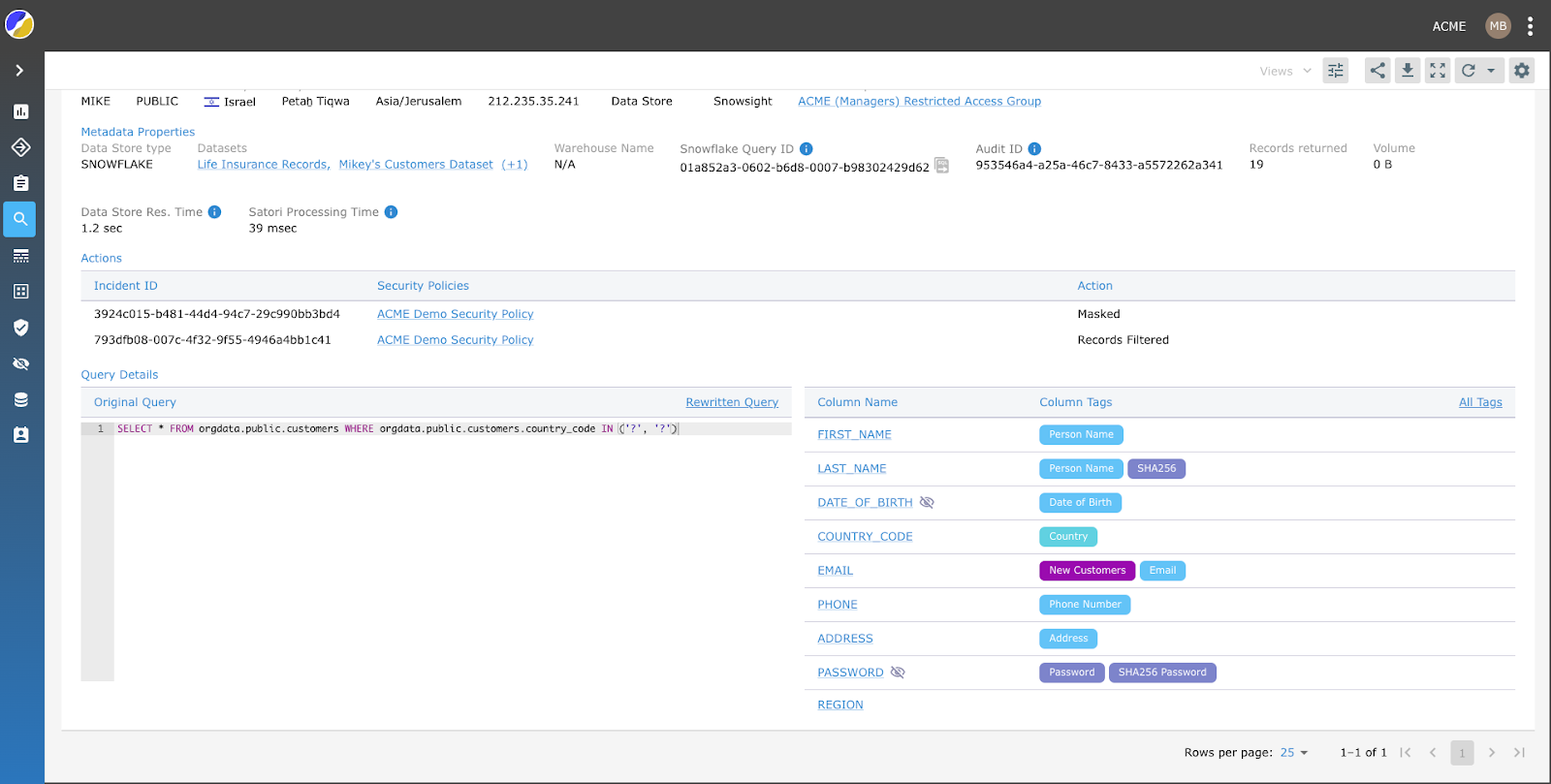
Now Nick can see who accessed which sensitive data and when in a
single frame. He can view all data access and audit logs across all
platforms, so sensitive data access is no longer “buried”. Nick can
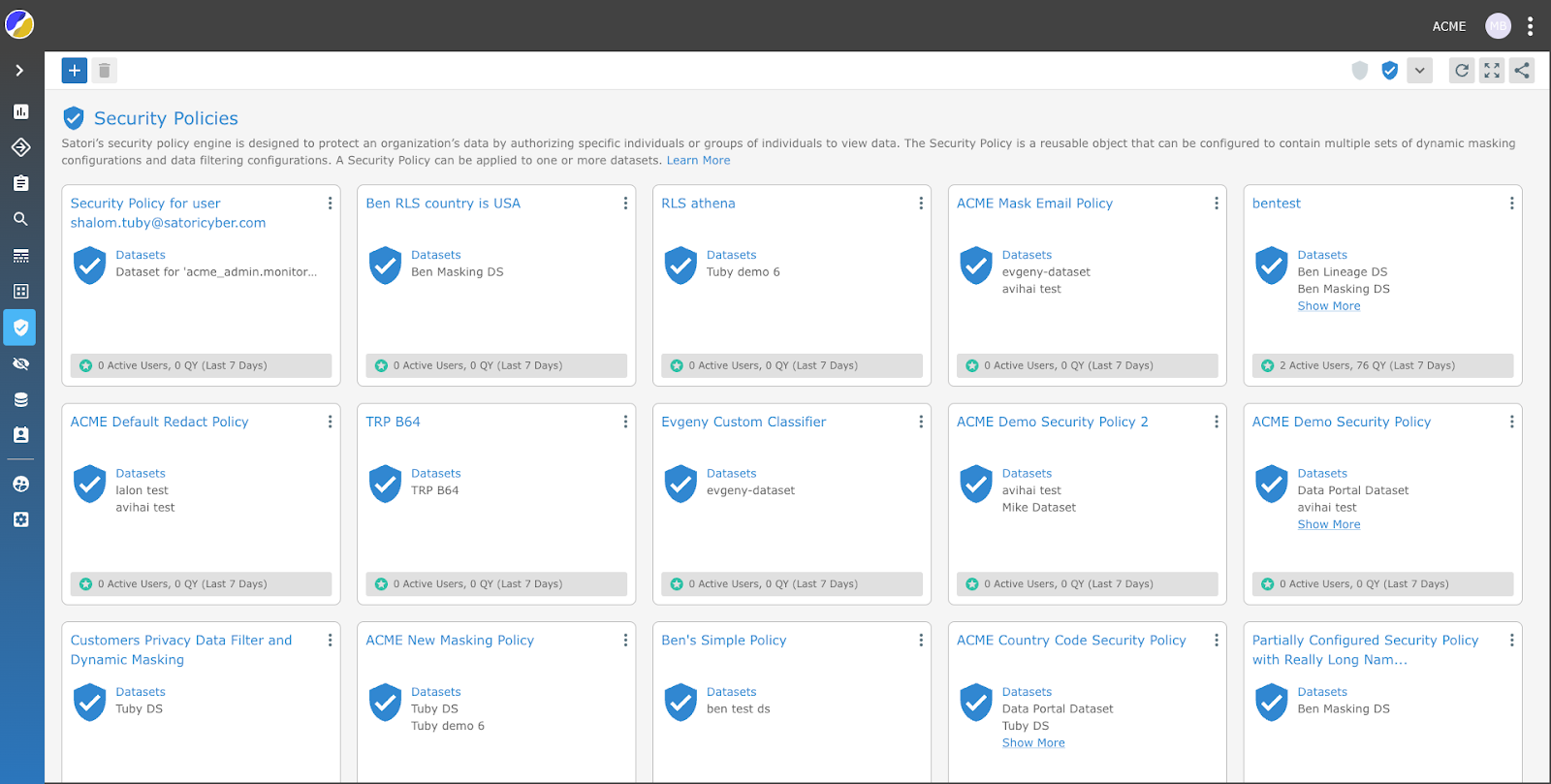
also see which security policies have been applied and easily
update the security policies and access requirements.
Implementing Security and Compliance Policies
Satori is easily implemented and can get Nick up and running
across ACME’s databases, data warehouses and lakes in days or hours
instead of months.
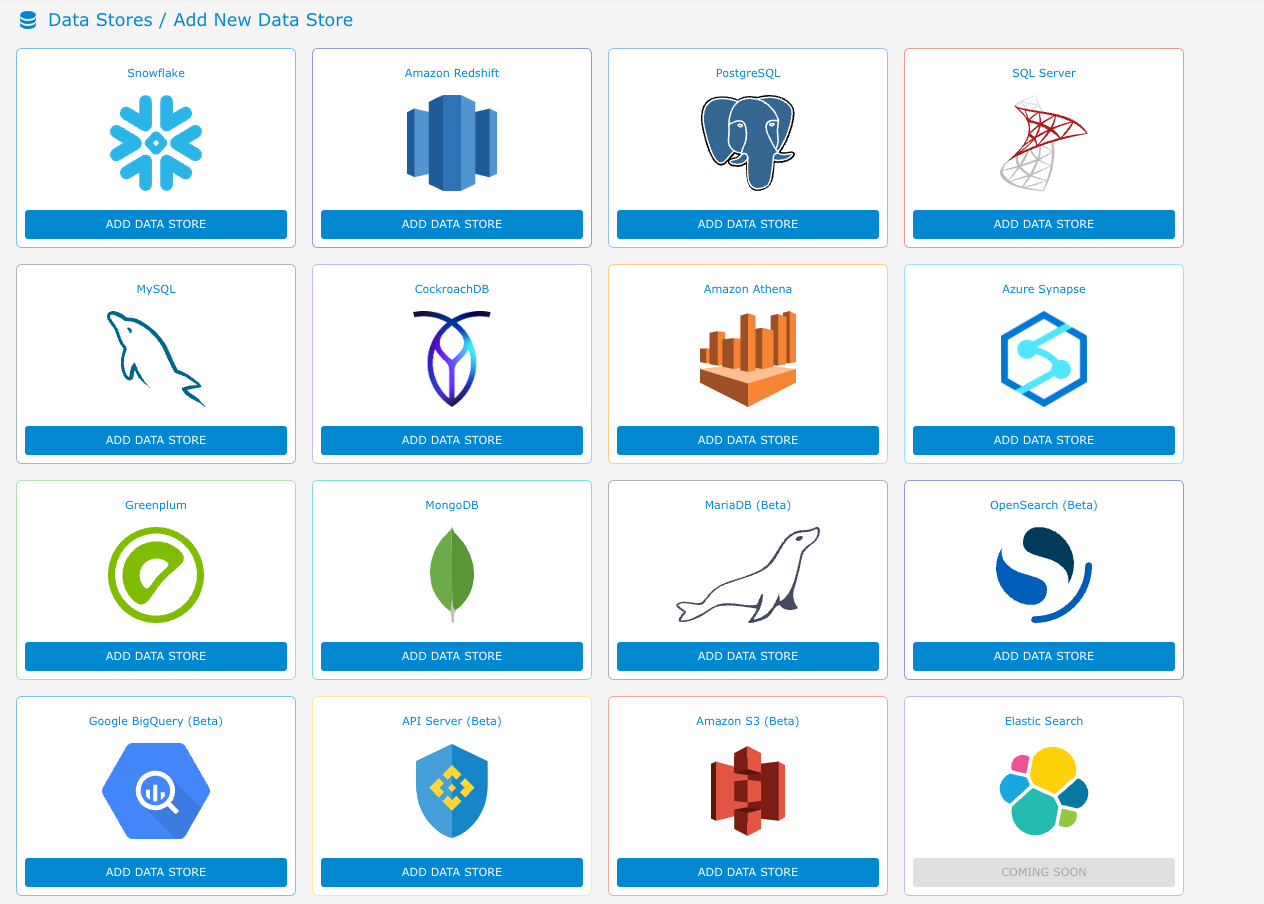
This is because Satori does not change anything in ACME’s data
stores, so there is no additional coding necessary, or changes to
the data; only the security policies and requirements need to be
applied.
Check how easy it is to set and implement security policies and
compliance requirements with Satori and take a test
drive[3].
Fully Automated
Satori automates the process of finding and classifying
sensitive data, applying the applicable security policies, and then
granting and revoking access controls. The ability to automatically
find sensitive data is invaluable to Nick because he is not the
actual owner of the databases, data warehouses or lakes where the
data is stored.
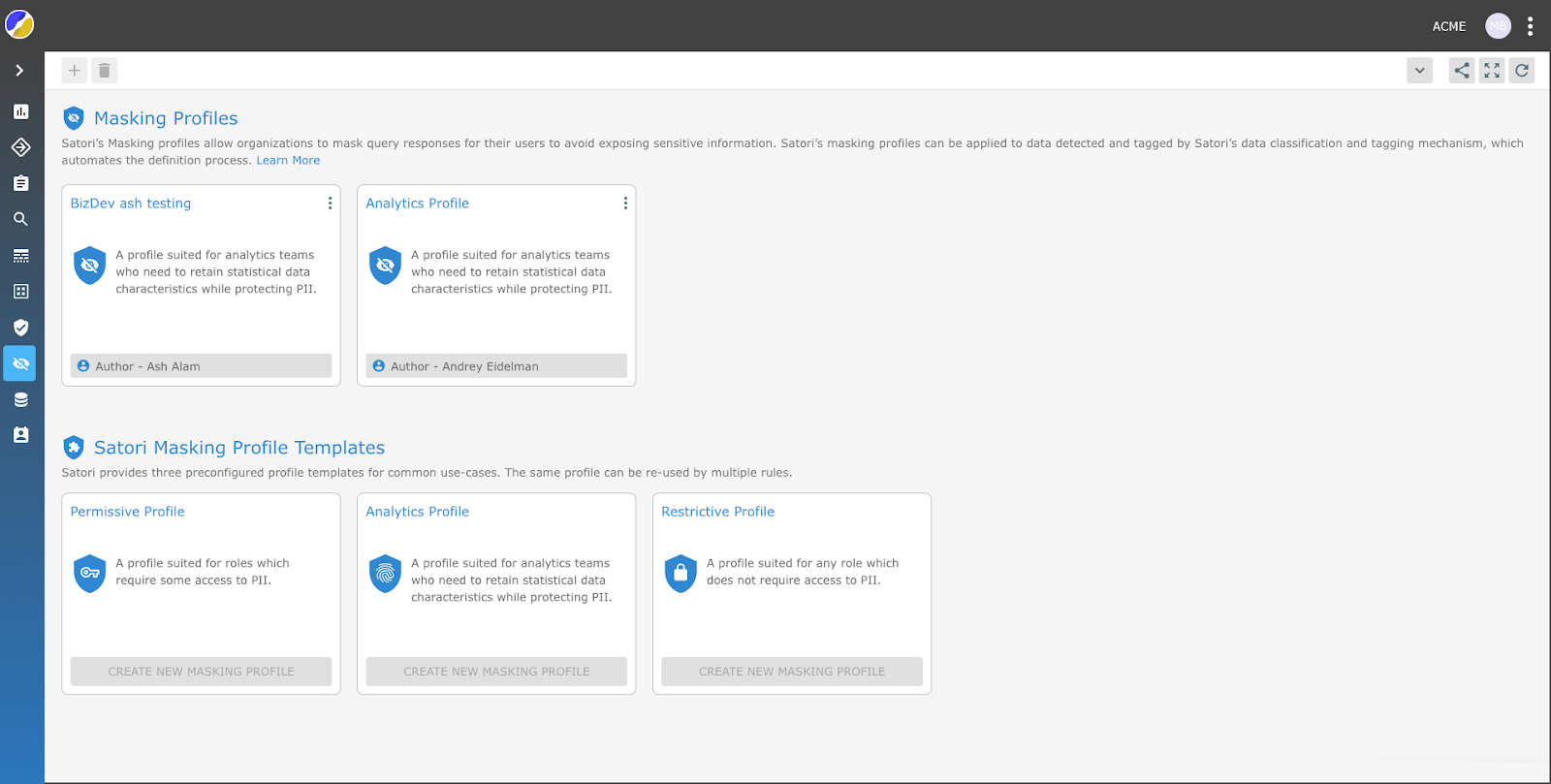
Nick now can control the implementation of security policies,
when regulations are updated, and we all know this happens. He can
quickly and easily implement the updated requirements and reduce
the likelihood of failing an audit or worse.
Nick is happy because he can easily implement the necessary
requirements. The data users are happy because using Satori
increases the level of security, but doesn’t change or delay their
user experience. As a bonus, the data engineers are also happy
because they don’t have to worry about Nick’s nagging to constantly
update and implement security policies.

Is a Data Security Platform a Good Fit?
Not everyone requires a data security platform, in some cases,
it is simpler and easier to continue with business as usual.
However, if a business has any of the following conditions, then a
data security platform is required to secure data.
- Sensitive data
- Multiple data users
- Multiple databases, data warehouses or data lakes
Satori’s Data Security Platform
Satori’s automated data security platform helped Nick gain
ownership over the data he is responsible for. This enabled him to
focus on the security and compliance parts of his job. Nick can
automate all processes from searching out sensitive data to
applying and enforcing security policies. He always has full
visibility of data access and can review the audit and security
logs quickly and easily.
To try Satori for yourself, take a test
drive[4] or book a
demo[5] meeting with Satori.
Found this article interesting? Follow us on Twitter [6]
and LinkedIn[7]
to read more exclusive content we post.
References
- ^
automated data security platform
(satoricyber.com) - ^
Satori’s automated data security
platform (satoricyber.com) - ^
test
drive (satoricyber.com) - ^
test
drive (satoricyber.com) - ^
book a
demo (satoricyber.com) - ^
Twitter
(twitter.com) - ^
LinkedIn
(www.linkedin.com)
Read more https://thehackernews.com/2023/02/breaking-security-black-box-in-dbs-data.html